
Introduction: Why the Distinction Is Not Merely Semantic
In contemporary enterprise technology discourse, the titles Integration Architect and System Architect are frequently used interchangeably – or worse, collapsed into the generic label of “solutions architect.” This terminological imprecision carries real professional and organisational costs. A practitioner who enters one role expecting the intellectual terrain of the other will find themselves either under-equipped or professionally misaligned, and an organisation that misidentifies which role it needs risks compounding technical debt in precisely the areas it most requires coherence.
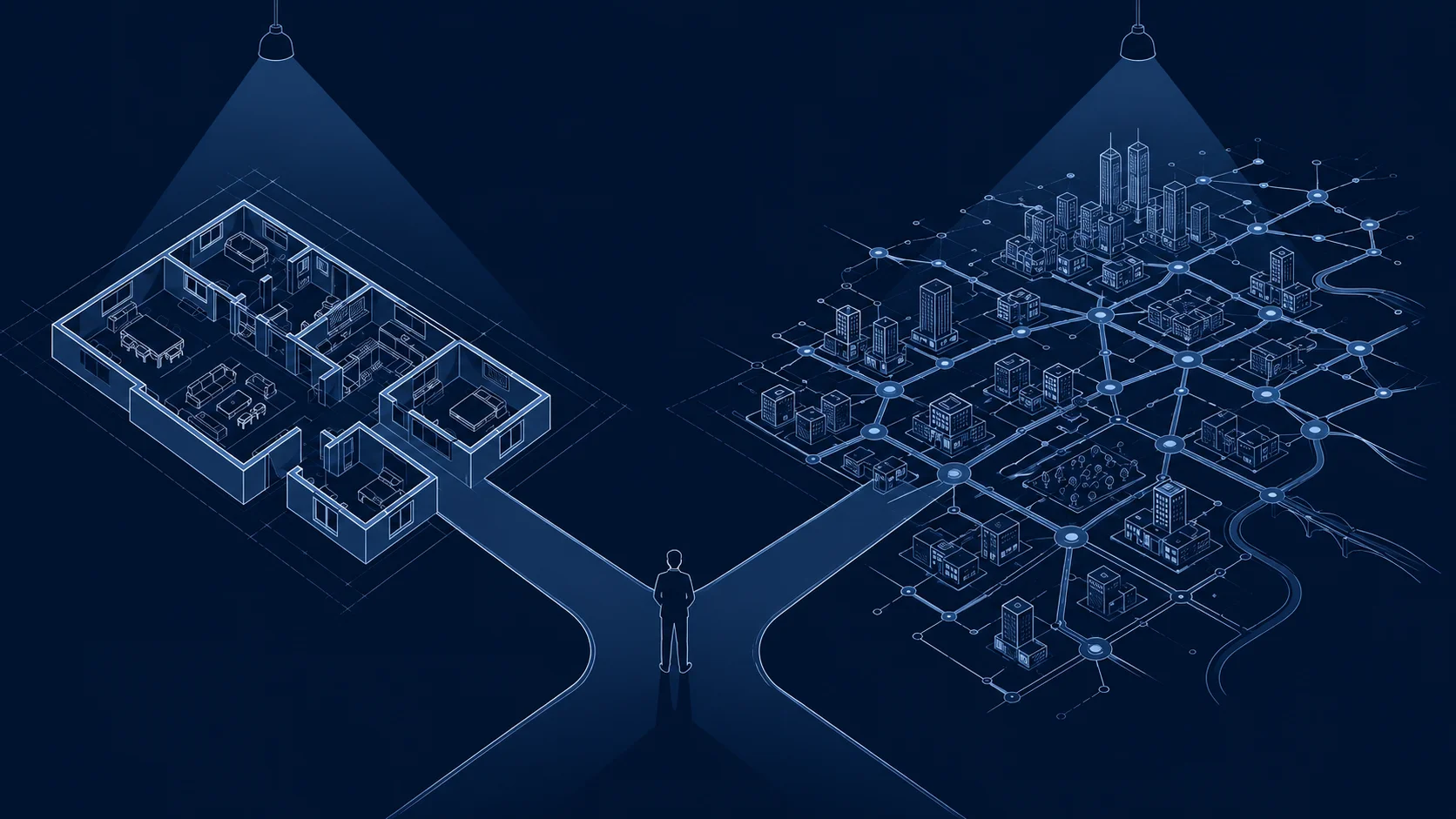
The distinction between Integration Architect vs. System Architect is not merely a matter of job-title semantics. It reflects fundamentally different epistemological orientations – one centred on the internal coherence of a single system, the other on the governance of relationships between systems. As enterprise architectures have evolved from monolithic stacks toward distributed microservices, cloud-native platforms, and API economies, both roles have grown more consequential, yet they have also grown more differentiated, demanding practitioners who understand not only where they sit but why that position exists.
| Core thesis: Integration Architect and System Architect are epistemically distinct roles defined by divergent scopes of concern, competency profiles, and career trajectories. Understanding that distinction is essential for practitioners navigating a maturing technology landscape. |
At a Glance: Role Summary
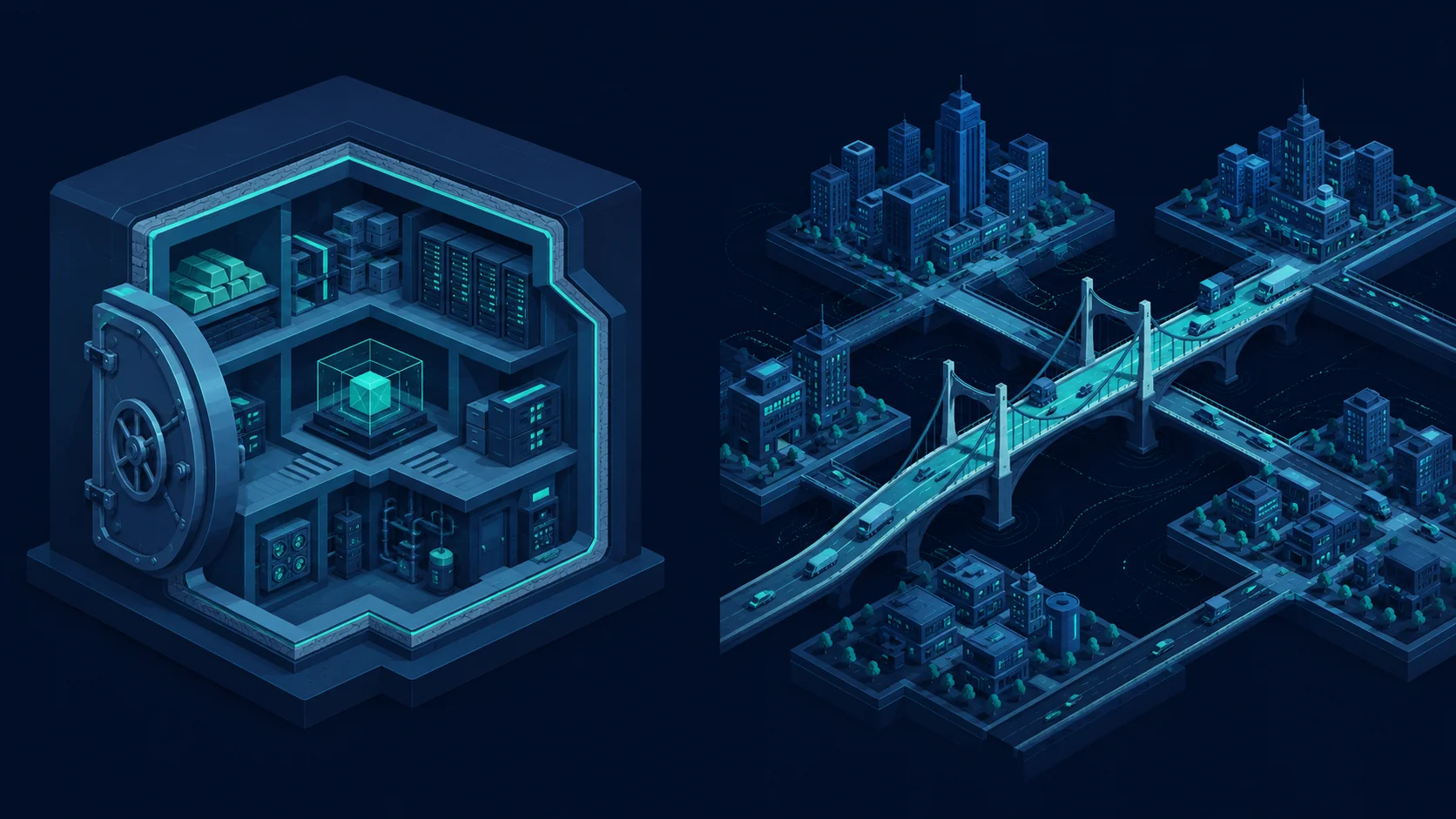
| SYSTEM ARCHITECT Inward-facing Designs internal structure, component decomposition, and non-functional qualities of a bounded system. | INTEGRATION ARCHITECT Outward-facing Governs cross-system communication, API contracts, middleware design, and enterprise data flows. |

Defining the Roles with Precision
System Architect
A System Architect is principally concerned with the internal design of a bounded system or application. Their mandate encompasses:
- Structural decomposition of a system into components and layers
- Selection of architectural patterns: layered, event-driven, hexagonal, CQRS
- Definition of non-functional requirements — scalability, resilience, security
- Governance of the technology stack and architecture decision records (ADRs)
Integration Architect
An Integration Architect, by contrast, operates at the seams between systems. Their domain is the design and governance of how disparate systems – built on different platforms, by different teams, at different points in time – communicate, share data, and compose into coherent enterprise capabilities:
- API design and lifecycle management (REST, GraphQL, AsyncAPI)
- Messaging and eventing infrastructure (Kafka, RabbitMQ, EventBridge)
- Middleware and integration platform tooling (MuleSoft, Boomi, IBM App Connect)
- Canonical data models, data governance, and cross-boundary compliance
| Critical insight: The conflation of these two roles is intellectually problematic. A system may be internally elegant and still fail catastrophically at integration, and an enterprise may achieve seamless integration between systems each of which harbours significant internal design deficiencies. |
Comparative Breakdown: Scope, Philosophy, and Accountability
The divergence between the two roles becomes most visible at the level of design philosophy. The table below maps the critical differentiators across six dimensions.
| Dimension | System Architect | Integration Architect |
| Primary scope | Single system or bounded domain | Ecosystem of systems; enterprise-wide topology |
| Design instrument | The boundary — encapsulation and hiding of internal complexity | The interface – API contracts, message schemas, event specifications |
| Cognitive orientation | Depth-first — pursues problems into implementation detail | Breadth-first – holds multiple systems in mind simultaneously |
| Accountability | Internal quality of one or several related systems over time | Integration topology, API governance, and middleware standards enterprise-wide |
| Key frameworks | DDD, Clean Architecture, CQRS, 12-Factor | TOGAF, EIP (Enterprise Integration Patterns), API-first design |
| Stakeholder surface | Primarily one engineering team and product owner | Multiple teams, departments, and external partners simultaneously |
Competency Profiles: Where the Paths Diverge
At the competency level, both roles demand overlapping but distinctly weighted skill sets. The table below maps the critical technical and cognitive differentiators that define each specialisation.
| Competency area | System Architect | Integration Architect |
| Code proximity | High – must read and reason about implementation-level decisions | Moderate – engineering literacy required, but breadth over depth |
| Data modelling | Internal data models, ORM design, persistence patterns | Canonical data models, cross-system schema governance, data lineage |
| Security | Authentication, authorisation, threat modelling within a system | API security (OAuth 2.0, mTLS), zero-trust cross-boundary access |
| Cloud platforms | Deep expertise in one provider’s compute and storage services | Cross-provider fluency; multi-cloud integration services |
| Tooling ecosystem | Language-specific frameworks, CI/CD, containerisation | iPaaS platforms, API gateways, event streaming, ESB/middleware |
Integration Architect Study Material and Preparation Pathways
For practitioners who identify with the integration track, structured preparation is both available and advisable. Authoritative Integration Architect study material spans three primary domains: enterprise architecture frameworks, platform-specific certifications, and foundational literature.
Certifications and Frameworks
| Credential / Framework | Issuing body | Relevance to integration |
| TOGAF Standard v10 | The Open Group | Enterprise architecture methodology – foundational for integration governance |
| MuleSoft Certified Integration Architect | Salesforce / MuleSoft | Industry-standard iPaaS design credential; technically rigorous |
| IBM Certified Solution Architect – Cloud Pak | IBM | Covers event streaming, API management, and enterprise messaging |
| Azure Integration Services Specialisation | Microsoft | Logic Apps, Service Bus, API Management, Event Grid |
| DAMA-DMBOK | DAMA International | Data governance framework – essential at enterprise integration boundaries |
Essential Reading
- Enterprise Integration Patterns – Gregor Hohpe & Bobby Woolf (2003): the canonical reference for integration design vocabulary; essential primary reading for any integration practitioner.
- Building Microservices – Sam Newman (2021): addresses integration challenges specific to distributed service architectures at enterprise scale.
- Fundamentals of Software Architecture – Mark Richards & Neal Ford (2020): balanced treatment of both system and integration concerns within a unified architectural framework.
- Designing Distributed Systems – Brendan Burns (2018): patterns for container-based distributed integration design applicable to modern cloud-native environments.
| Career advantage: Practitioners who can reason fluently across TOGAF governance, event-driven architecture patterns, and cloud-native integration services – combining architectural abstraction with platform-specific knowledge – are among the most sought-after professionals in contemporary enterprise technology. |
Contextual Fit: When Each Role Creates Maximum Value
The organisational context in which each role creates maximum value is instructive. The following table maps industry types, system landscapes, and team structures to the role most likely to deliver impact.
| Organisational context | System Architect is most critical when… | Integration Architect is most critical when… |
| Industry type | Financial services, healthcare IT, advanced engineering – where internal design quality is a competitive differentiator | Retail omnichannel, logistics, healthcare networks – where value depends on orchestrating multiple systems |
| System landscape | Building a single complex, domain-specific platform from greenfield | Connecting 10+ heterogeneous systems across business units or partners |
| Strategic concern | Architectural debt within its own monolith or service cluster is slowing delivery | Data inconsistency, integration failures, or partner onboarding friction are causing operational loss |
| Team structure | One to several closely collaborating product engineering teams | Multiple autonomous teams whose outputs must compose into enterprise-level capabilities |

A Decision Framework: Three Diagnostic Questions
For professionals at the crossroads between Integration Architect vs. System Architect, three questions clarify the decision with considerable reliability.
| QUESTION 1 OF 3: Where does your intellectual energy concentrate? If you find deepest satisfaction in bringing internal order to a system – refining its component structure, optimizing performance characteristics, ensuring its design communicates intent – the System Architect path is likely the more natural fit. If you are energized by making heterogeneous systems work together, negotiating API contracts across teams, or designing the plumbing through which an enterprise breathes, the Integration Architect path is the stronger signal. |
| QUESTION 2 OF 3: What is the characteristic scale of the problems you want to own? System Architects work at the depth of a single system or bounded domain; Integration Architects work at the breadth of an enterprise or ecosystem. Practitioners who prefer the clarity of a contained problem domain will find system architecture more comfortable, while those who thrive in the ambiguity of cross-boundary governance will find integration architecture more rewarding. |
| QUESTION 3 OF 3: What does your organizational environment require? Career decisions made in tension with organizational demand frequently produce frustration. An Integration Architect working in an organization with a single monolithic application has limited scope for impact; a System Architect in an enterprise defined by integration complexity may find their contributions perpetually subordinated to concerns they are not equipped to address. |
Frequently Asked Questions
Can one person perform both roles?
In smaller organisations or early-stage companies, one individual is often expected to cover elements of both – a reality that makes the conceptual distinction no less important. However, at enterprise scale, the two roles are interdependent but distinct: the System Architect designs the system; the Integration Architect governs how that system participates in the broader enterprise ecosystem.
Which role has greater long-term career value?
Both have strong market demand. System Architects are deeply sought in product engineering and platform engineering contexts. Integration Architects command premium compensation in large enterprise environments — particularly those undergoing digital transformation, cloud migration, or merger and acquisition activity — where integration complexity is existential rather than incidental.
Is TOGAF necessary for an Integration Architect?
TOGAF is not strictly necessary, but it provides the governance vocabulary through which integration decisions are communicated to non-technical stakeholders and embedded in enterprise strategy. Platform-specific certifications (MuleSoft, Azure, IBM) provide technical depth; TOGAF provides strategic altitude. The strongest practitioners typically hold both.
Conclusion: Two Paths, One Architecture
The Integration Architect vs. System Architect question is ultimately one about the locus of architectural value – whether it resides within the system or between systems. Both roles are essential; both are intellectually demanding; and both have grown more consequential as enterprise architectures have become more distributed and interconnected.
What distinguishes exceptional practitioners in either domain is not merely technical mastery but conceptual clarity about the scope of their responsibility and the nature of the problems they are best positioned to solve. Practitioners who invest in that self-understanding – whether through formal Integration Architect study material, structured mentorship, or deliberate exposure to complex real-world architectures – are positioned not merely to succeed in their chosen role, but to elevate the organizations they serve.
Key insights to carry forward:
- The roles are epistemically distinct, not merely differently titled
- System Architects think in encapsulation; Integration Architects think in exposure and mediation
- Integration Architect study material should span EIP literature, iPaaS certifications, and enterprise frameworks simultaneously
- Organizational context should be a primary factor in role selection – demand must exist for the role to have impact
- In a technology landscape defined by ecosystem complexity, the architect who knows precisely what kind of architect they are is already ahead