
A strong Sales Cloud implementation helps teams capture prospects, qualify demand, manage deals, forecast revenue, and learn from closed outcomes.
The Salesforce Certified Sales Cloud Consultant exam therefore tests business reasoning as well as product knowledge. Sales Lifecycle represents 20% of the official outline and includes requirements, sales processes, KPIs, forecasting, territory management, productivity tools, Einstein capabilities, and AI.
This SalesforceKing guide focuses on lead-to-close and the consultant decisions behind it.
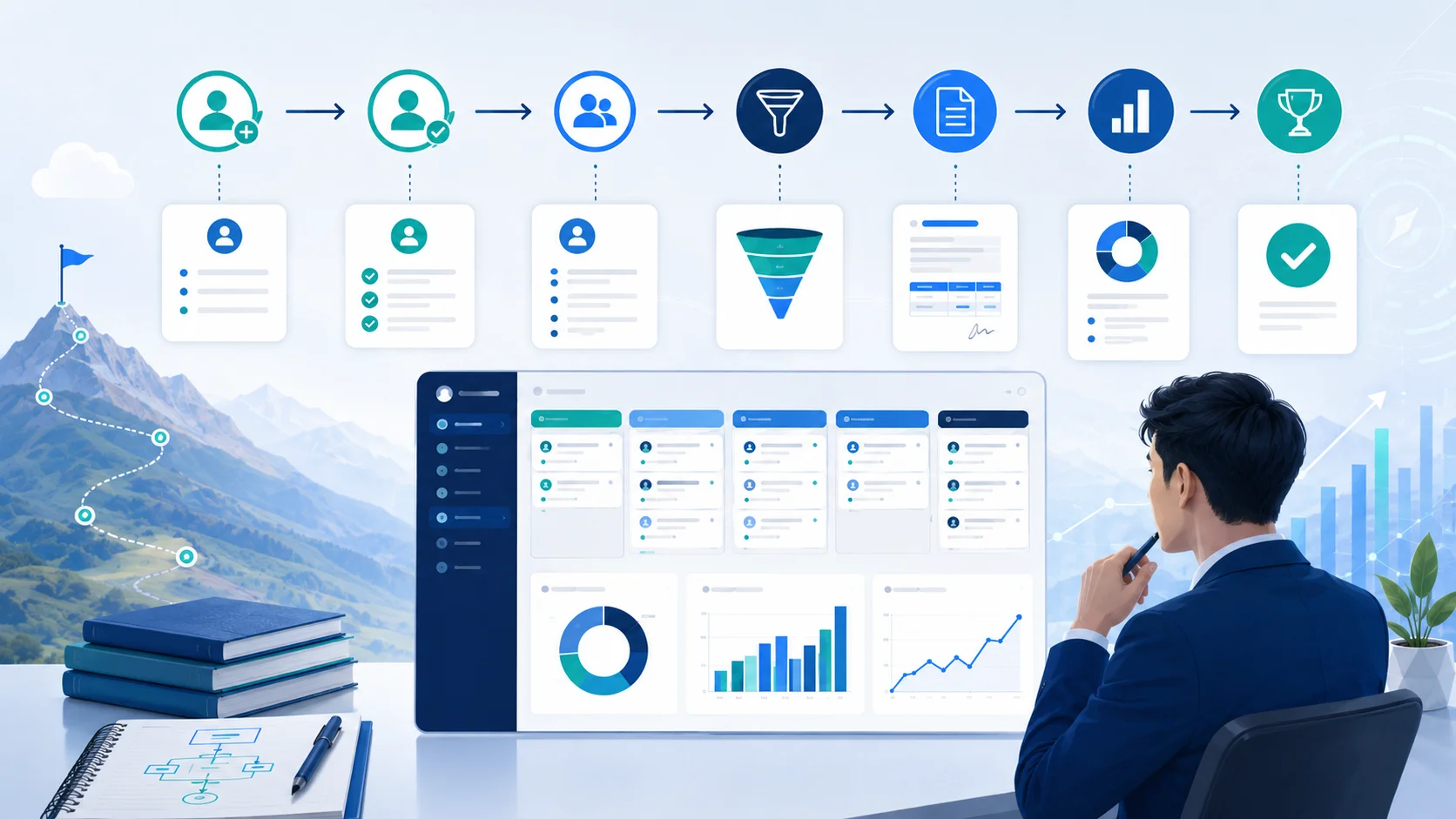
What Lead-to-Close Means in Sales Cloud?
The sales lifecycle is the journey from initial interest to a sales outcome. A sales process is the organization’s defined sequence of selling stages. The pipeline is the collection of open opportunities moving through those stages.
Lead-to-close covers capture, qualification, conversion, opportunity management, quoting, forecasting, and closure. Lead-to-cash may continue into contracts, orders, invoicing, fulfillment, and payment. Confirm the process boundaries before recommending a solution.
Lead Capture, Routing, and Qualification
A Lead usually represents a person or organization that has shown interest but has not yet become a qualified opportunity. Leads may enter Salesforce through manual entry, imports, integrations, marketing activity, or Web-to-Lead.
Before configuring assignment, ask:
- Which fields determine ownership?
- Should leads go to representatives or a queue?
- How should existing customers be handled?
- What happens when routing data is missing?
- Do language, territory, product expertise, or capacity matter?
A software company may route demo requests by country, but some prospects may need a language or product specialist. Existing customers may need to remain with their Account owners.
Assignment rules support defined criteria, queues hold team records or exceptions, and duplicate controls help protect customer history and reporting.
Consultant takeaway: Choose the simplest maintainable routing design that satisfies the complete requirement.
Converting a Qualified Lead
Lead conversion moves a qualified prospect into records used for an established customer relationship and, when appropriate, an active deal.
In a business-account model, conversion creates or associates an Account and Contact. Creating an Opportunity is optional. When Person Accounts are enabled, Salesforce can convert leads into business accounts or person accounts, depending on the Lead data and conversion conditions.
An Opportunity should not be created when no active revenue project exists. A partner inquiry or future buyer may be a valid relationship without belonging in the pipeline.
Conversion Scenario
A company receives requests from new prospects and existing customers. New prospects should be assigned by region, while current customers must remain with their Account owners.
A suitable design may use matching logic, standard assignment for new prospects, and an exception queue. At conversion, the representative should associate the Lead with the correct existing Account.
The exam lesson is how conversion affects ownership, data quality, reporting, and pipeline credibility.
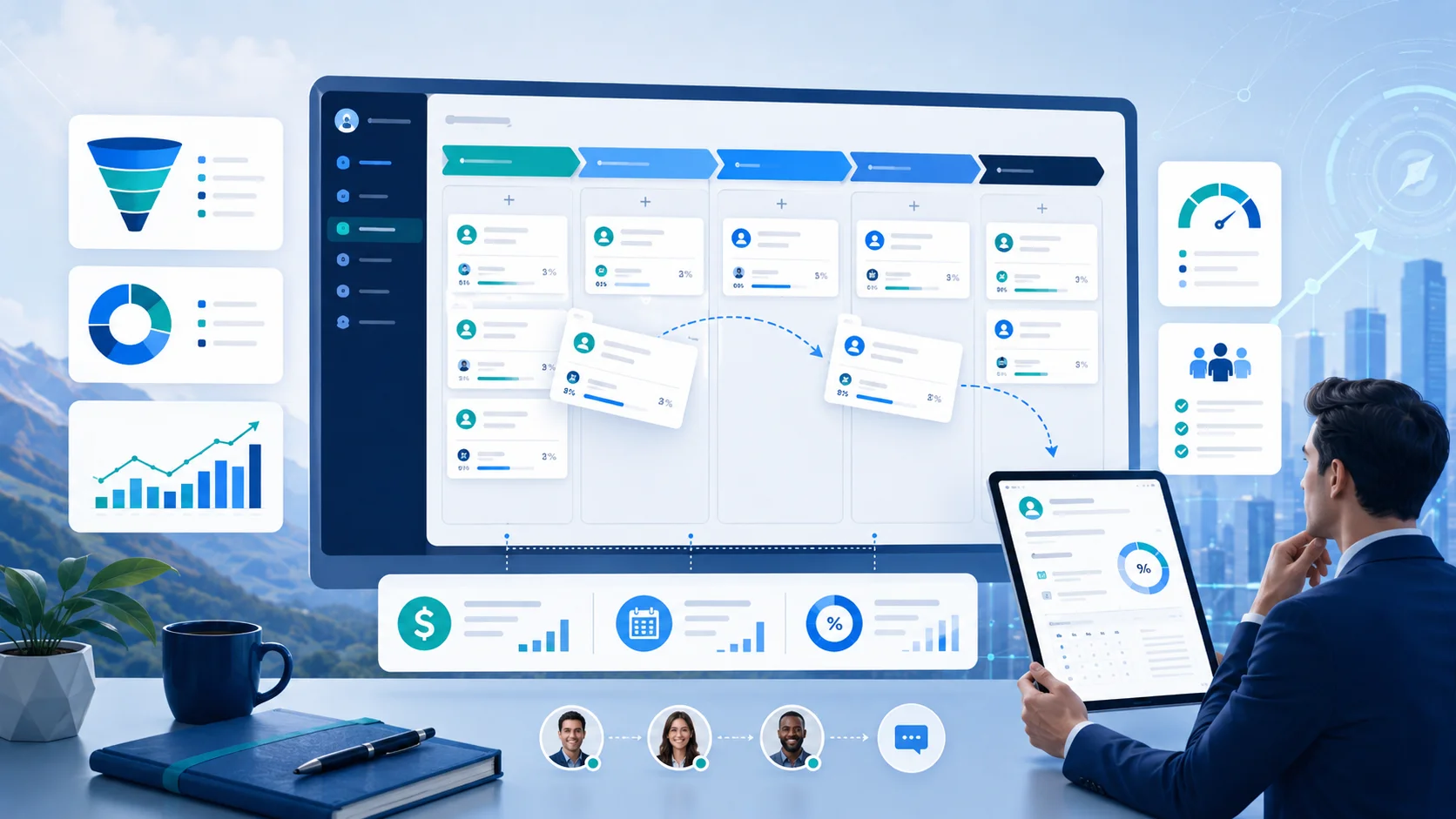
Managing Opportunities Through the Pipeline
An Opportunity represents a qualified revenue-generating deal. Important information includes Stage, Amount, Close Date, Probability, Account, products, owner, activities, and customer stakeholders.
Stages should represent meaningful commercial milestones, not every call or internal task. Clear entry and exit criteria help users apply stages consistently.
A sales process is a filtered list of Opportunity Stage values. Record types can associate different sales processes, page layouts, and picklist values with different Opportunity types.
Separate record types are justified only when stages, required fields, layouts, or workflows genuinely differ.
For example, a subscription deal may use Trial, Negotiation, and Close, while an enterprise deal may require Security, Legal, and Procurement reviews.
Consultant takeaway: Evaluate standard Opportunity configuration before considering a custom object.
Products, Price Books, and Quotes
Products describe what the organization sells. Price books store available prices. Products added to an Opportunity become Opportunity Products with deal-specific quantities, prices, and values.
Custom price books are useful when the same products have different approved prices for regions, customer segments, currencies, or sales channels. The organization should not duplicate Product records simply because prices differ.
Salesforce supports multiple Quotes for one Opportunity, allowing alternative proposals. Only one Quote can be synchronized with the Opportunity at a time.
Simple proposals may fit standard quoting. Complex subscriptions, bundles, amendments, usage pricing, contracting, or billing may require additional revenue-management capabilities. The requirement should drive the recommendation.
Forecasting and Closing the Deal
Stage, Probability, and Forecast Category are related but different:
- Stage shows where the deal is in the sales process.
- Probability estimates its chance of being won.
- Forecast Category groups it by expected closing confidence.
Forecast categories commonly distinguish Pipeline, Best Case, Commit, and Closed business. Forecast managers can view and adjust forecasts for users below them in the forecast hierarchy, which also controls how values roll up.
Forecast adjustments change the rollup without altering Opportunity values. Forecasts become unreliable when users leave expired Close Dates, inflated Amounts, inconsistent stages, or inactive deals in the pipeline. Stage guidance, validation, pipeline reviews, dashboards, coaching, and adoption monitoring can improve reliability.
Closed Won records success. Closed Lost should capture a structured reason such as price, timing, competitor, budget, or product gap. These reasons support coaching, win-rate analysis, forecasting, and product decisions.
Turning Business Goals into KPIs
The exam may present a stakeholder request for a dashboard or report. First identify the decision the stakeholder needs to make.
Useful lead-to-close KPIs include:
- Lead response time
- Lead conversion rate
- Pipeline value by stage
- Stage aging
- Sales-cycle length
- Opportunity win rate
- Average deal size
- Forecast accuracy
- Closed Lost reasons
Each KPI needs a clear definition, data source, owner, period, and expected action. A falling conversion rate may reflect poor lead quality, slow follow-up, or inconsistent qualification. The dashboard reveals the pattern, but the business must investigate the cause.
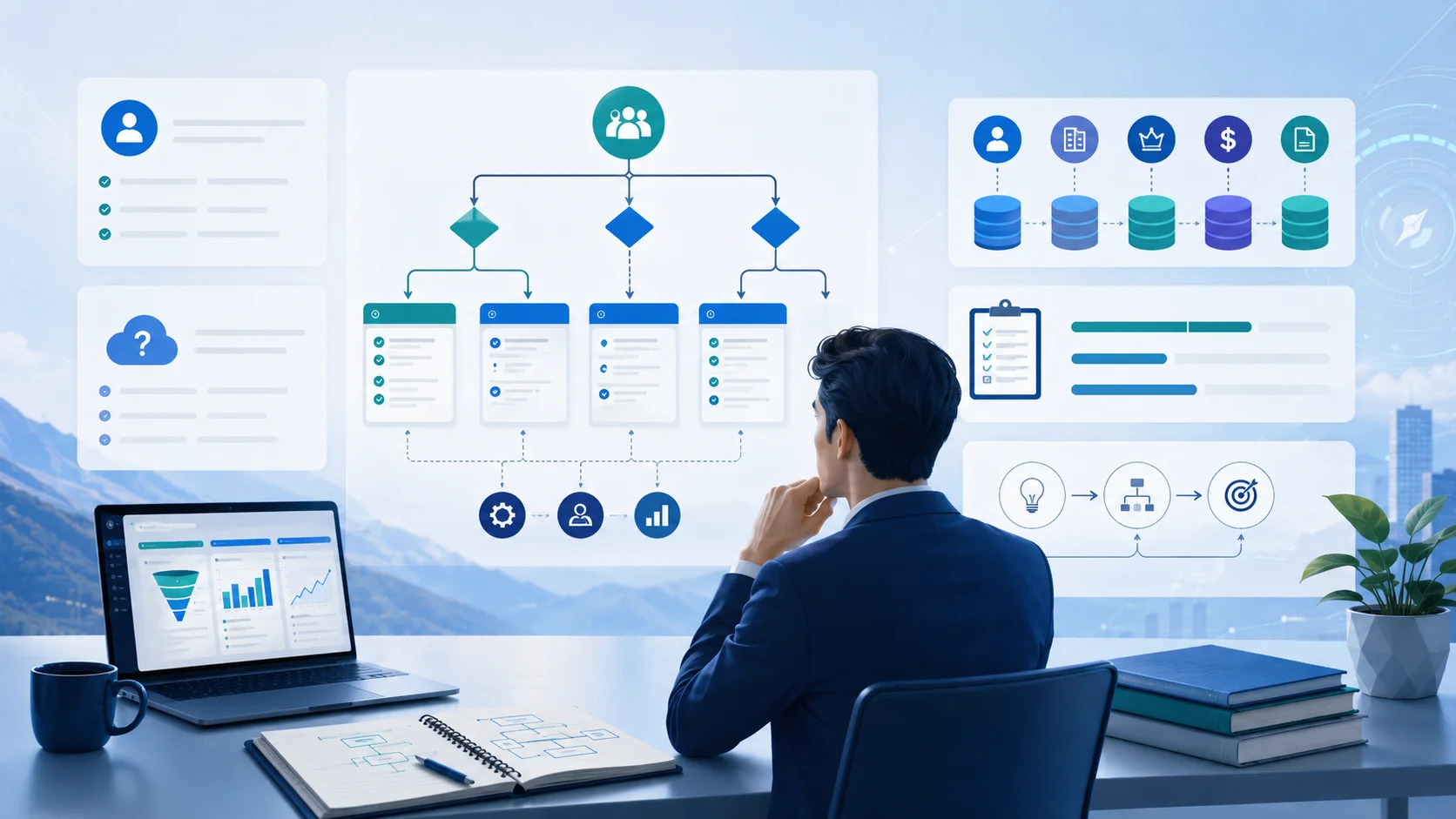
How to Solve Sales Lifecycle Scenarios?
Use this decision process:
- Identify the required business outcome.
- Determine the users, records, ownership, and stages involved.
- Evaluate standard Salesforce functionality first.
- Consider data quality, security, reporting, scale, and adoption.
- Eliminate unnecessary complexity.
- Select the solution that supports the complete process.
Different teams do not automatically require record types, and regional ownership does not automatically require Enterprise Territory Management. Read for the underlying requirement.
Common Exam Mistakes
Candidates commonly make these errors:
- Treating every prospect as an Opportunity
- Assuming conversion must create a new Account
- Confusing stages with forecast categories
- Creating record types for minor differences
- Ignoring duplicate management and ownership
- Recommending custom development too early
- Overlooking reporting, training, and adoption
- Choosing an answer from one keyword
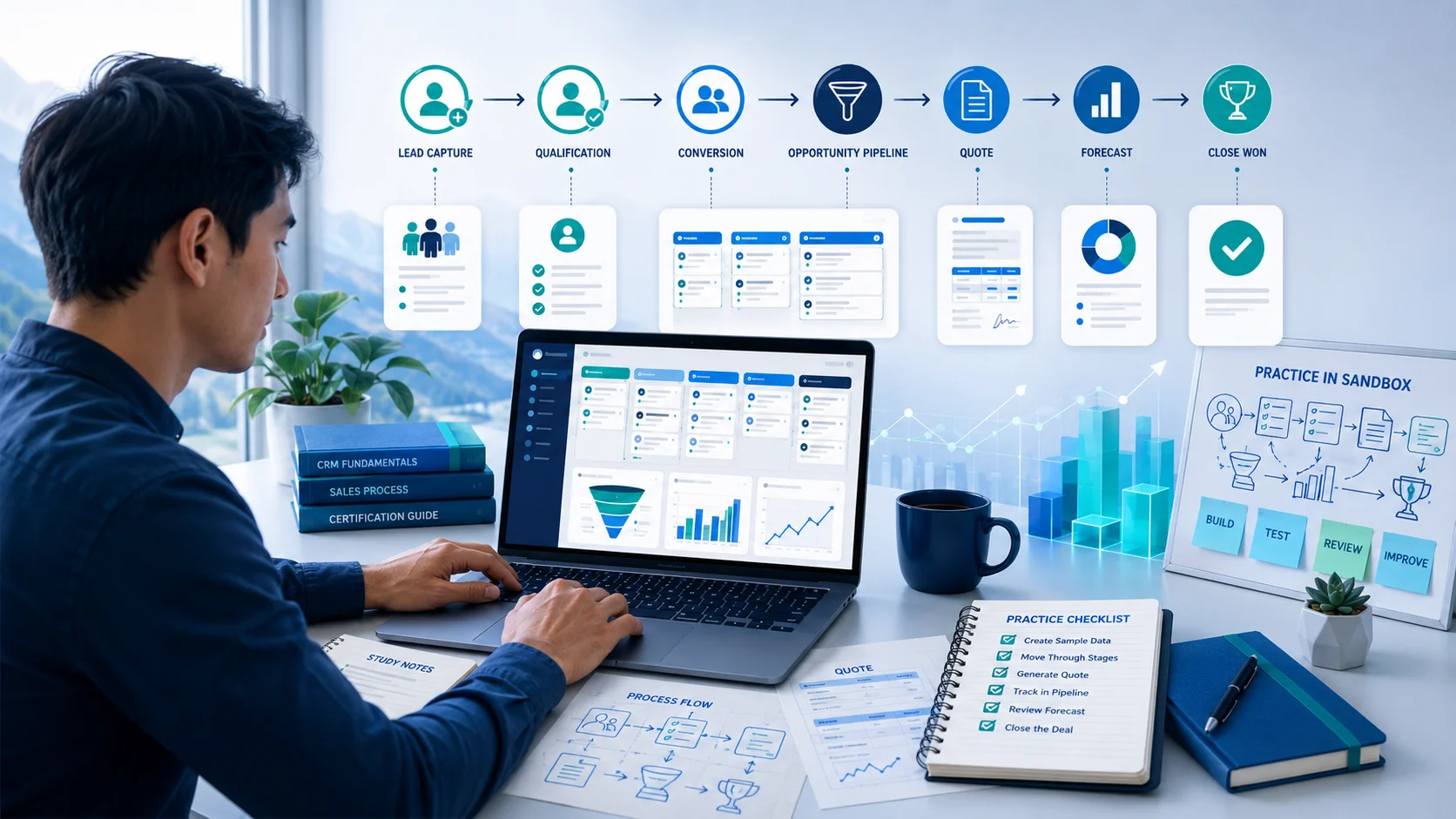
How to Practice the Process?
Use the official exam guide and certification Trailmix as your foundation. Salesforce recommends combining self-study with practical implementation experience.
After reviewing the official objectives, use Salesforce Sales Cloud Consultant practice questions to test how well you can apply these concepts to business scenarios.
In a practice environment, build two contrasting sales models. Test routing and conversion, configure stages and record types, add Products and Quotes, and review pipeline and forecast reports. Explain why each design meets the requirement and avoids unnecessary complexity.
Frequently Asked Questions
Is lead-to-close the entire Sales Lifecycle exam domain?
No. The official domain also covers KPIs, sales and marketing processes, Sales Engagement, Salesforce Inbox, Enterprise Territory Management, forecasting, Sales Cloud Einstein, and generative or predictive AI.
Does converting a Lead always create an Opportunity?
No. An Opportunity is optional. A company may convert a Lead to establish an Account and Contact relationship while waiting for a defined buying project. Creating a deal too early can inflate pipeline and forecast reports.
What is the difference between a sales process and a record type?
A sales process limits available Opportunity Stages. A record type can connect that process with selected picklist values and a page layout. Enterprise and transactional sales, for example, may need different stages and data-entry experiences.
Should every sales team have its own Opportunity record type?
No. Separate record types are appropriate only when teams have genuinely different stages, fields, layouts, or workflows. A different manager, team name, or territory alone is not enough.
How should I prepare for scenario-based questions?
Identify the outcome, then evaluate users, records, ownership, data quality, security, reporting, scale, and adoption. Compare standard features before selecting custom development or additional products.
Do I need to memorize every Salesforce feature?
Accurate feature knowledge matters, but focus on the business problem each feature solves, its limitations, and when it is appropriate.
Conclusion
The Salesforce Sales Cloud Consultant exam expects candidates to connect sales requirements with maintainable platform design. You should understand how Leads are qualified, how conversion affects customer data, how Opportunities progress, and how products, quotes, forecasts, KPIs, and closed outcomes support business decisions. Build the complete journey in a practice environment, test normal cases and exceptions, and explain each design choice. That combination of product knowledge and business reasoning is the strongest preparation for lead-to-close scenarios.