
Most Salesforce admins eventually hit a ceiling. You can build elegant Flows, tighten security, and automate almost anything. Then a requirement appears that clicks alone cannot solve. That moment is usually when Apex enters the conversation, often with equal parts curiosity and caution.
Moving into code does not mean abandoning your declarative mindset. In fact, the strongest developers are former admins who understand how the platform behaves. If you are aiming for the Salesforce Certified Platform Developer credential, learning Apex patterns early will save frustration later. Patterns help you write logic that survives growth, change, and real users.
Here are five Apex patterns every declarative admin should understand, explained in a way that feels familiar rather than intimidating.
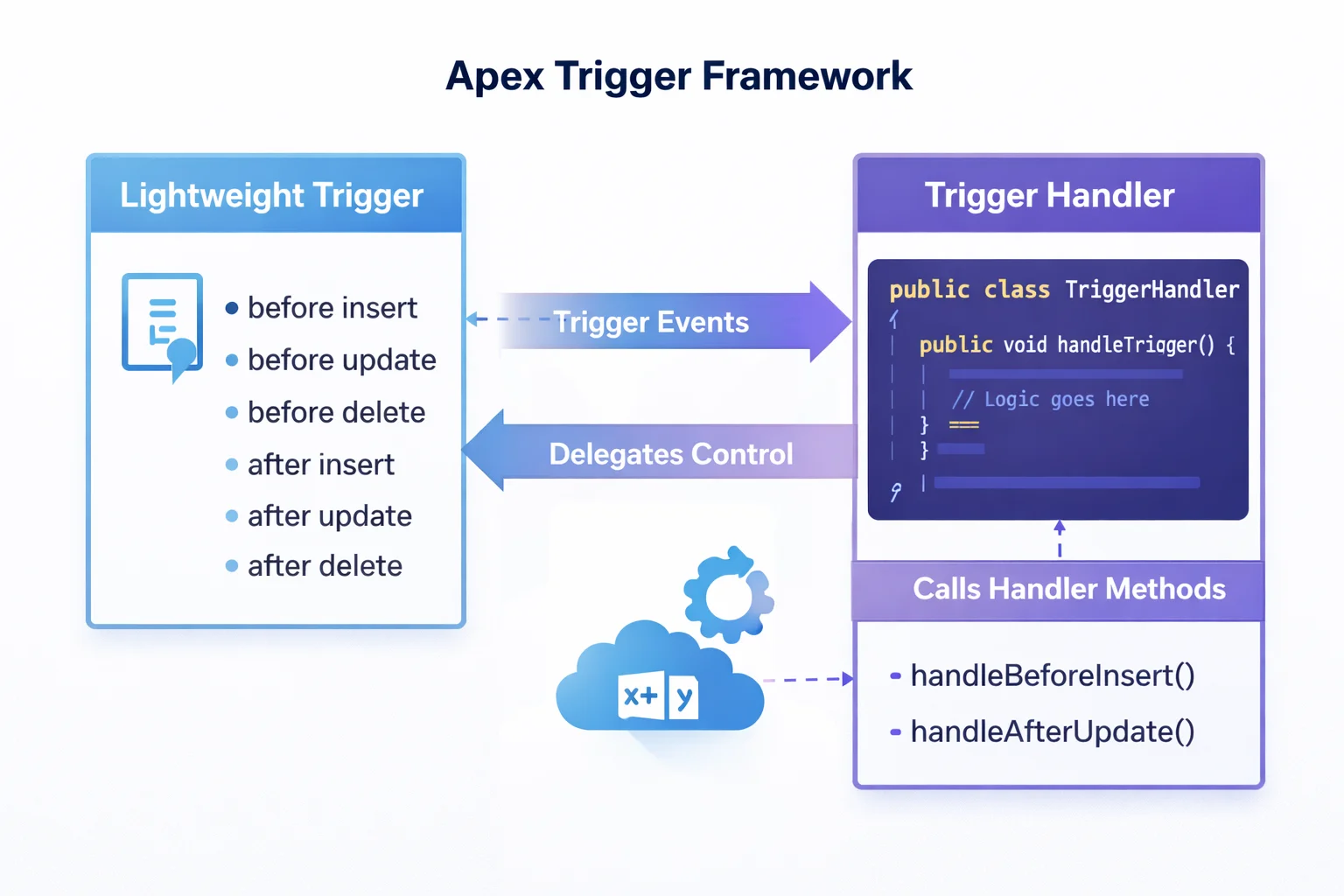
1. Triggers Should Coordinate, Not Do the Work
Triggers fire automatically, which feels similar to record-based automation. The mistake many new developers make is packing too much logic directly into them. A clean trigger pattern keeps the trigger itself lightweight and passes responsibility to a handler class.
Think of the trigger as a traffic signal. It decides when something should happen, not how everything gets done. This approach prevents unexpected behavior during bulk updates and keeps logic easier to follow when multiple processes touch the same object.
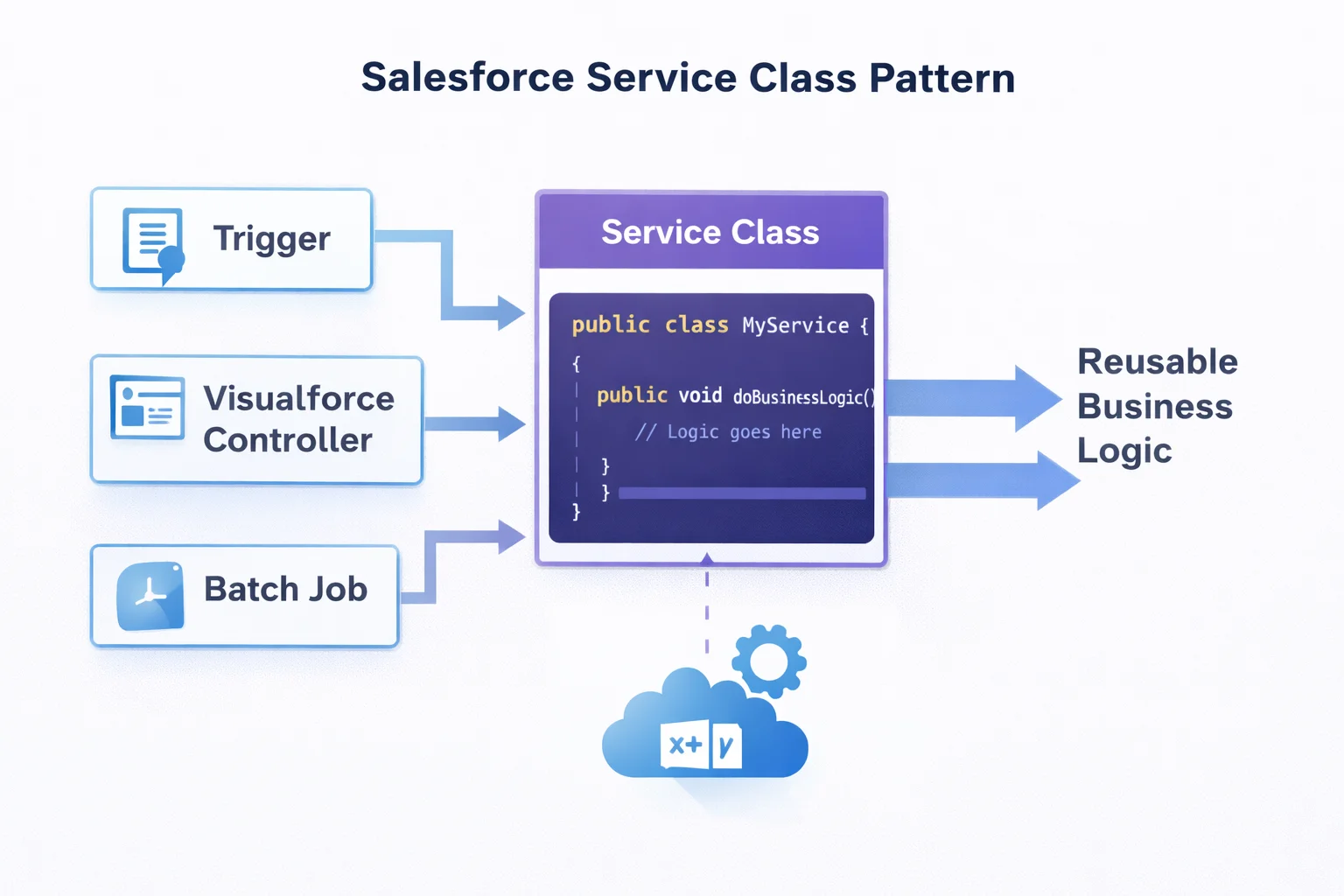
2. Service Classes Keep Business Rules Organized
Admins appreciate central sources of truth. Validation rules live in one place. Approval processes are predictable. Apex benefits from the same discipline. Service classes group business logic so it can be reused across triggers, controllers, and background jobs.
Instead of copying logic between components, service classes let you update behavior once and trust it everywhere. This structure becomes essential as codebases grow and is explored further in Advanced Apex Patterns for PDII Candidates, where complexity increases fast.
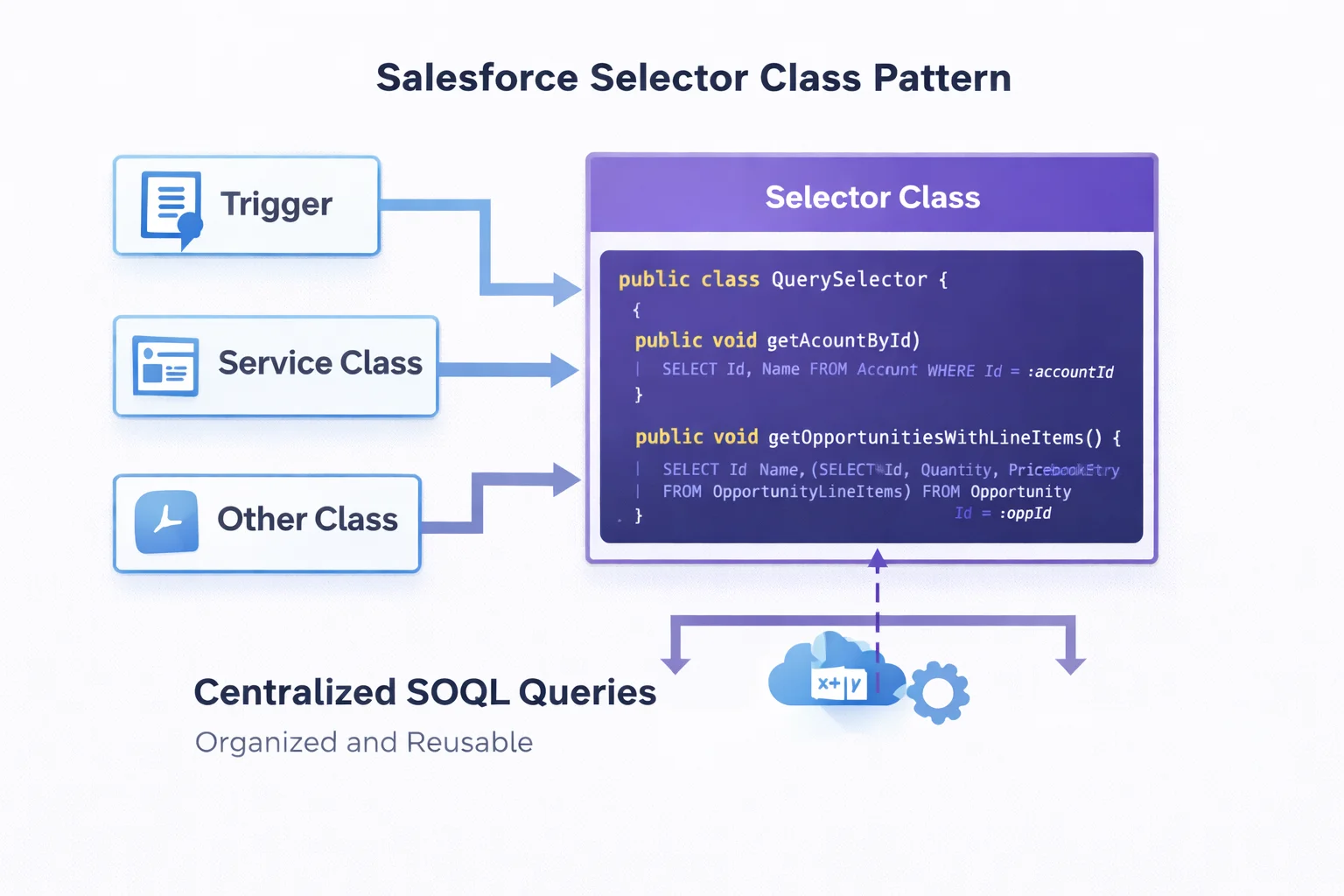
3. Selector Classes Make Data Access Predictable
SOQL limits are one of the first realities new developers encounter. Selector classes solve this by centralizing queries in one location. They define which fields are needed and how records are retrieved, reducing duplicate queries scattered throughout codebase.
Admins who enjoy building precise reports often grasp this idea quickly. Selector classes feel like curated data views, designed for reuse and performance. They also simplify testing, since query logic lives in a consistent place.
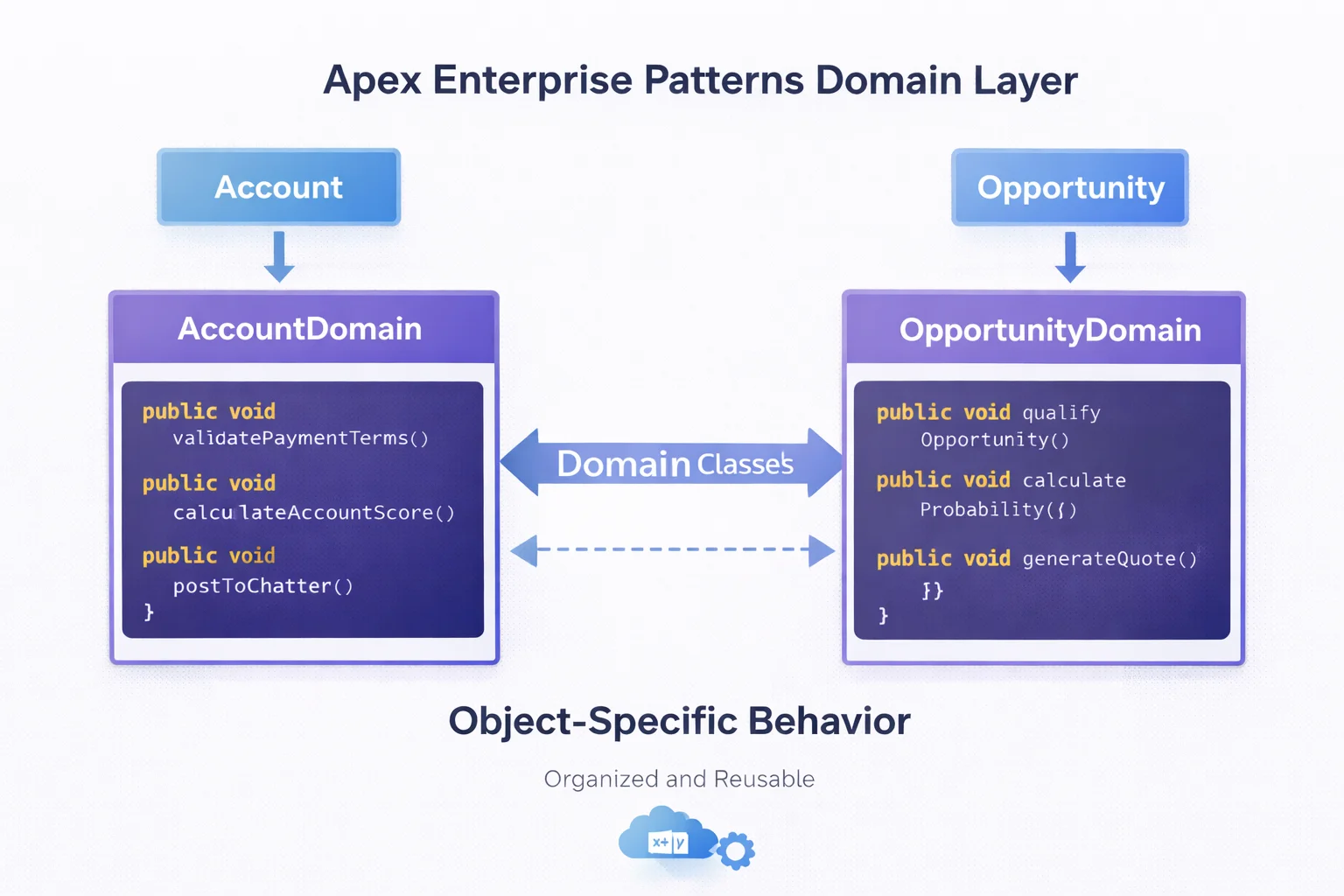
4. Domain Logic Matches How Admins Think About Objects
Admins naturally think in objects. Accounts follow different rules than Opportunities. Custom objects often carry unique behavior. Domain patterns embrace this thinking by attaching logic to the object it belongs to.
Instead of asking what a trigger should do, you focus on how a record should behave. That mental shift leads to code that reads more naturally and stays easier to maintain. It also reinforces good habits around responsibility and clarity.
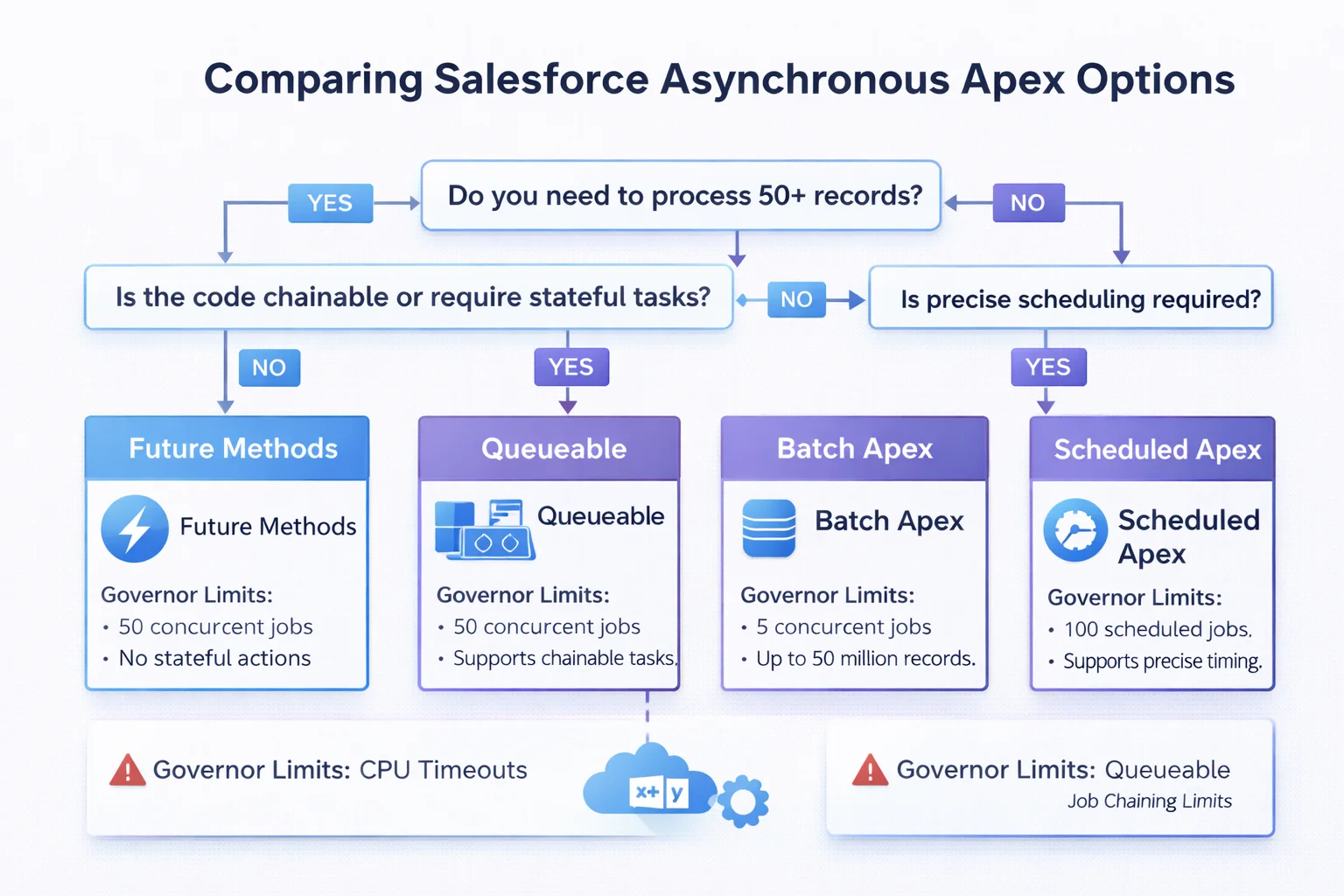
5. Asynchronous Apex Respects Platform Limits
Some processes take time. Admins already manage this using scheduled automation or background tools. Apex offers similar options through future methods, queue able jobs, and batch processing.
Knowing when to move work out of the main transaction protects users from slow saves and prevents governor limit errors. This is an area where hands-on practice matters, especially when using Platform Developer Practice Tests that simulate real scenarios rather than theory.
Learning without Losing Momentum
Transitioning from admin to developer is less about talent and more about guidance. Platforms like SalesforceKing help bridge the gap by explaining patterns in practical terms, not abstract rules. Pair that with career insights from How to Transition from Admin to Developer: A Salesforce Career Path Guide, and the journey feels intentional instead of overwhelming. Apex patterns are not about writing clever code. They are about writing reliable logic that works with the platform you already understand. Once that connection clicks, code stops feeling like a foreign language and starts feeling like the next logical step forward.