
The Salesforce Certified Platform Administrator exam now includes a dedicated Agentforce section, making AI knowledge an important part of modern Salesforce Admin exam preparation. Salesforce refreshed the exam effective December 15, 2025, and Agentforce now accounts for 8% of the updated exam blueprint. This section tests Agentforce capabilities, use cases, AI suitability, security, permission troubleshooting, prompts, instructions, light testing, and conversation preview in Agent Builder.
This does not mean you need to become an Agentforce developer. The exam focuses on admin-level understanding. You should know when Agentforce is useful, when Flow or human review is better, how permissions affect agent behavior, and how admins can support safe, reliable AI experiences in Salesforce.

Quick Salesforce Admin Exam Facts
The Salesforce Certified Platform Administrator exam includes 60 multiple-choice questions and up to five unscored questions. Candidates get 105 minutes to complete the exam, and the passing score for the English version is 68%.
The updated exam blueprint includes these topic weights:
| Exam Area | Weight |
| Configuration and Setup | 15% |
| Object Manager and Lightning App Builder | 15% |
| Sales and Marketing Applications | 10% |
| Service and Support Applications | 10% |
| Productivity and Collaboration | 10% |
| Data and Analytics Management | 17% |
| Automation | 15% |
| Agentforce | 8% |
Agentforce is not the biggest section, but it is new enough that many candidates may overlook it. That makes it a valuable scoring opportunity if you prepare correctly.

What the Agentforce AI Section Tests on the Salesforce Admin Exam?
The Agentforce AI section on the Salesforce Admin exam tests how well you understand Salesforce AI from an admin point of view. It is not designed to test advanced development skills. Instead, it checks whether you can make practical decisions about AI use cases, access, security, and agent behavior.
You should prepare for questions about:
- Agentforce capabilities and common use cases
- When Agentforce is the right solution
- When AI is not the best solution
- How Agentforce uses trusted Salesforce data
- How permissions affect what an agent can access
- How prompts, instructions, topics, and actions guide agent behavior
- How to troubleshoot agent permission issues
- How to preview and lightly test agent conversations in Agent Builder
Salesforce explains that admins are expected to help ensure agents are grounded in trusted data, aligned with business needs, and deployed with the right guardrails.
Why Agentforce Matters for Salesforce Admin Candidates?
Agentforce matters because the Salesforce Admin role is changing. Admins are no longer responsible only for users, objects, fields, reports, dashboards, automation, and security. They are also expected to understand how AI fits into business processes.
An Agentforce agent is only as strong as the data, permissions, instructions, and actions behind it. If the data is poor, the agent may give weak answers. If access is restricted, the agent may fail to retrieve records. If instructions are unclear, the agent may respond in a way that does not match business expectations.
That is why this section is closely connected to traditional admin skills. Security, sharing, automation, data quality, and business process knowledge all help you answer Agentforce questions more confidently.
Understand Agentforce in Simple Admin Terms
For exam preparation, keep the concept simple:
Agentforce helps users complete work by combining trusted data, reasoning, and approved actions.
Salesforce describes Agentforce as using data, reasoning, and actions to perform tasks. It can understand user intent, decide what data is needed, identify required actions, and execute those actions to complete work.
A Salesforce Admin should understand these four building blocks.
- Data
Data is the information the agent uses. This may include CRM records, customer details, cases, Knowledge articles, product information, policies, or connected business data.
If the agent is not grounded in the right data, it may give incomplete, vague, or incorrect answers.
- Reasoning
Reasoning is how the agent understands a request, decides what information is needed, and chooses the next step.
For the Salesforce Admin exam, you do not need to explain AI models in technical detail. You only need to understand that the agent uses context, data, and instructions to decide how to respond.
- Actions
Actions are the tasks the agent is allowed to perform. These may include retrieving information, updating records, creating cases, launching automation, or working with connected systems.
If the correct action is missing or the agent does not have permission to perform it, the task may fail.
- Guardrails
Guardrails define what the agent can and cannot do. Trailhead explains that Agentforce guardrails include rules, guidelines, and best practices designed to support safe, ethical, and compliant AI use. Guardrails also help reduce hallucinations and protect against risks such as prompt injection.
For exam questions, always think about security, governance, and business control.

Best Use Cases for Agentforce in the Salesforce Admin Exam
Agentforce is usually a good fit when the task is repetitive, data-supported, and safe to automate with proper guardrails.
Good Agentforce use cases may include:
- Answering common customer questions
- Helping service agents summarize case details
- Guiding employees through internal support processes
- Supporting lead qualification
- Assisting with customer follow-up
- Helping users find relevant information faster
- Escalating complex or sensitive issues to a human user
- Reducing manual work when approved data and actions are available
A strong Agentforce use case usually includes four things: a clear business need, trusted data, approved actions, and proper permissions.
When Agentforce is Not the Best Answer?
A common exam mistake is assuming Agentforce is always the right answer because it is new. It is not.
Agentforce may not be the best solution when a process requires strict step-by-step logic, exact outcomes, sensitive decision-making, or formal approval.
For example, if a company needs every discount approval to follow fixed rules based on discount percentage, region, and manager level, Flow or an approval process may be better. If a decision involves legal, financial, medical, or high-impact consequences, a human reviewer should usually stay involved.
Trailhead notes that AI should not make legal or important decisions without a human making the final decision.
Use this simple exam rule:
Choose Agentforce for flexible AI assistance. Choose Flow for fixed logic. Choose human review for sensitive judgment.
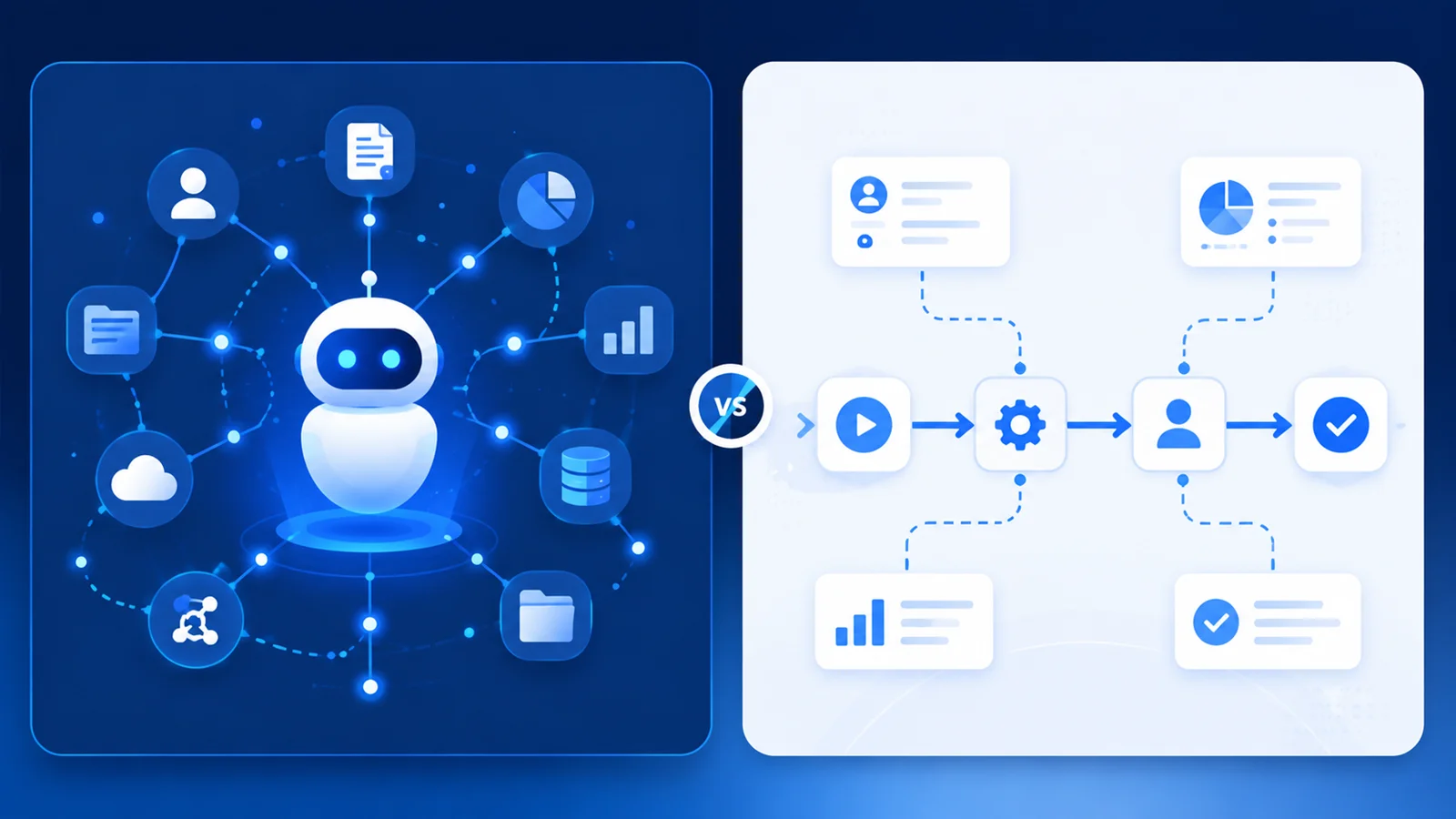
Agentforce vs Flow: What Salesforce Admin Candidates Should Know
Salesforce exam questions often test the best solution, not just whether you recognize a feature name. This comparison can help you choose the right answer.
| Solution | Best Used When | Exam Tip |
| Agentforce | The request may vary, but the agent can use trusted data, reasoning, and approved actions | Choose this for flexible AI-assisted work with guardrails |
| Flow | The process follows clear, fixed, rule-based logic | Choose this when outcomes must be predictable and exact |
| Traditional Bot | The conversation follows a controlled script or predefined path | Choose this when the business wants strict conversation control |
| Approval Process | A record needs formal review based on business rules | Choose this for structured approval scenarios |
| Human Review | The decision is sensitive, risky, or requires judgment | Choose this for legal, financial, medical, or high-impact cases |
The safest approach is to read the scenario carefully. If the question says the process must be consistent, rule-based, or formally approved, Agentforce may not be the best answer.
Agentforce Security and Permission Troubleshooting
Security is one of the most important areas in the Agentforce AI section. If an agent cannot answer a question or complete a task, the issue may not be the AI model. It may be related to access, permissions, data, or configuration.
Before choosing an answer in a troubleshooting question, ask:
- Does the agent have the correct permission set?
- Can the agent access the object?
- Can it access the required fields?
- Does record-level sharing allow access?
- Is the correct data source connected?
- Are the correct actions available?
- Are prompts and topic instructions clear?
- Has the agent been tested before deployment?
Salesforce states that Agentforce can reason, plan, and execute tasks across Salesforce and external systems, which makes secure access and governance especially important.
The best admin mindset is simple:
Agentforce can only work with the data, access, actions, and guardrails it is given.
Prompts, Instructions, Topics, and Actions in Agentforce
Many candidates confuse these terms. Keep them simple.
- Prompts
Prompts guide how AI should respond or generate output. In exam scenarios, prompts may affect the quality, format, or relevance of an agent’s response.
- Instructions
Instructions tell the agent how to behave. They may define tone, decision rules, escalation rules, or limits.
- Topics
Topics group related work the agent can handle. Trailhead explains that topics are categories of actions related to a job an agent performs. Topics contain actions and instructions that define what the agent can do.
- Actions
Actions are the tools the agent uses to complete work. If an action is unavailable or blocked by permissions, the agent may not complete the request.
For the exam, expect scenario questions where an agent gives the wrong response, misses a step, or fails to complete an action. Your job is to identify whether the issue is related to data, permissions, prompts, instructions, topics, or actions.
Agent Builder Basics for the Salesforce Admin Exam
You do not need advanced developer-level Agentforce knowledge for the Salesforce Admin exam. However, you should understand the admin-level purpose of Agent Builder.
Agent Builder may be used to:
- Maintain prompts
- Update instructions
- Preview conversations
- Test agent responses
- Review whether the agent follows business expectations
- Adjust how the agent behaves in supported scenarios
Salesforce’s exam update specifically mentions maintaining, updating, or installing prompts and instructions in Agent Builder, including light testing and conversation preview.
If an agent gives poor responses or does not follow the expected process, the admin should review the data source, permissions, actions, prompts, instructions, and testing results before assuming the AI itself is the problem.
Common Agentforce AI Exam Traps
Avoid these mistakes when preparing for the Agentforce AI section:
- Choosing Agentforce for every automation scenario
- Ignoring object permissions and field-level security
- Forgetting record-level sharing
- Confusing prompts with actions
- Confusing topics with instructions
- Ignoring human handoff for sensitive cases
- Choosing AI when the process needs fixed rule-based logic
- Treating Agentforce as separate from core admin skills
- Memorizing definitions without practicing scenarios
The Agentforce section is small, but it rewards practical thinking. You need to understand how Salesforce AI works inside a secure, governed CRM environment.
Agentforce AI Practice Scenarios for Salesforce Admin Candidates
These are original practice scenarios created for study purposes. They are not real Salesforce exam questions.
Scenario 1: Agent Cannot Access Case Records
A service team deploys an Agentforce agent to summarize customer cases. The agent summarizes some cases correctly but cannot access others.
Best admin action: Review the agent’s object permissions, field-level security, and record-level access.
Why: Agentforce depends on Salesforce security. If the agent cannot access the record or field, it cannot use that information.
Scenario 2: Agentforce or Flow?
A company needs all discount approvals to follow exact rules based on discount percentage, region, and manager level.
Best solution: Flow or approval process.
Why: The process requires predictable rule-based logic. Agentforce is better for flexible assistance, not strict approval routing.
Scenario 3: Poor Response Tone
An agent gives long, technical answers, but the business wants short customer-friendly replies.
Best admin action: Review and update the prompt or instructions.
Why: Instructions help control how the agent responds.
Scenario 4: Sensitive Decision
A customer asks the agent to make a final decision about a legally sensitive refund dispute.
Best solution: Escalate to a human user.
Why: Sensitive or high-impact decisions should include human judgment and governance.
Scenario 5: Vague Answers
An agent gives vague answers to product support questions.
Best admin action: Check whether the agent is grounded in the correct Knowledge articles or approved data source.
Why: Agentforce performs better when it uses trusted, relevant, and accessible data.

7-Day Study Plan for the Agentforce AI Section
Day 1: Review the Updated Exam Blueprint
Start with the latest Salesforce Platform Administrator practice test. Confirm the current topic weights and make sure your study plan matches the updated blueprint.
Day 2: Learn Agentforce Basics
Study what agents are, how they use data and actions, and why guardrails matter.
Day 3: Review Agentforce Use Cases
Focus on service, sales, employee support, customer support, and internal productivity examples. Learn when Agentforce is the right fit.
Day 4: Study Security and Permissions
Review permission sets, object access, field-level security, record-level sharing, and the principle of least privilege.
Day 5: Learn Prompts, Instructions, Topics, and Actions
Understand how each part controls agent behavior. Practice identifying which part is causing a scenario issue.
Day 6: Practice Scenario-Based Questions
Use scenario-based MCQs. Focus on choosing the safest, most practical admin action.
Day 7: Review Weak Areas
Revisit missed questions. Review Agentforce vs Flow vs traditional bot vs human review until the decision logic feels natural.
Quick Revision Checklist for the Agentforce AI Section
Before exam day, make sure you can answer these questions:
- What is Agentforce in simple admin terms?
- How much of the updated exam blueprint does Agentforce represent?
- When is Agentforce the right solution?
- When is Flow better than Agentforce?
- When should a human reviewer be involved?
- How do permissions affect what an agent can access?
- What is the difference between prompts, instructions, topics, and actions?
- What should an admin check when an agent cannot complete a task?
- How does Agent Builder help with testing and previewing agent behavior?
- Why do trusted data and guardrails matter?
If you can answer these clearly, you are in a strong position for this section.
Best Way to Prepare for the Agentforce AI Section
The best way to prepare for the Agentforce AI section is to combine official Salesforce resources with practical admin thinking. Do not study Agentforce as a separate buzzword topic. Study it as part of secure Salesforce administration.
Your study plan should include:
- Reviewing the latest Salesforce Platform Administrator exam questions
- Completing relevant Trailhead learning
- Studying Agentforce use cases
- Practicing AI suitability questions
- Reviewing Salesforce security and sharing
- Understanding prompts, instructions, topics, actions, and guardrails
- Practicing scenario-based questions instead of memorizing definitions only
The goal is not to become an AI architect. The goal is to understand how Agentforce fits into real admin responsibilities.
Frequently Asked Questions
Is Agentforce included in the Salesforce Admin exam?
Yes. Agentforce is included in the refreshed Salesforce Certified Platform Administrator exam and accounts for 8% of the updated exam blueprint.
How many Agentforce questions can I expect?
Because Agentforce is 8% of the exam, candidates may see a small number of Agentforce-related questions. The exact number can vary because Salesforce exams may include unscored questions.
Do I need developer knowledge for the Agentforce section?
No. This section focuses on admin-level understanding. You should know use cases, permissions, prompts, instructions, testing, conversation preview, and basic Agent Builder concepts.
Is Agentforce always better than Flow?
No. Agentforce is better for flexible AI-assisted work. Flow is better when the process requires fixed logic, predictable steps, and exact outcomes.
What is the biggest mistake candidates make in the Agentforce section?
The biggest mistake is memorizing definitions without understanding scenarios. The exam is more likely to test practical admin judgment, such as choosing the right tool or troubleshooting agent access.
What should I study first?
Start with the official Salesforce exam guide and SalesforceKing preparation resources. Then review Agentforce basics, security, permissions, guardrails, and scenario-based practice questions.
Final Thoughts
The Agentforce AI section on the Salesforce Admin exam reflects the future of the admin role. Admins are expected to understand not only how to configure Salesforce, but also how to support safe, useful, and well-governed AI experiences.
To tackle this section, focus on practical judgment. Learn what Agentforce does, when to use it, when not to use it, how permissions affect agent behavior, and how Agent Builder supports basic maintenance and testing. If you already have strong Salesforce fundamentals, this section becomes much easier. Agentforce depends on the same foundation every admin need: trusted data, secure access, clear automation, useful testing, and business-aligned configuration.