
Preparing for the Salesforce Revenue Management Consultant exam without CPQ experience may seem difficult, especially when the blueprint covers product configuration, pricing, quoting, contracts, orders, assets, and billing. Salesforce does not require previous CPQ experience or another certification before taking Rev-Con-201, but you need a clear understanding of the Product-to-Cash lifecycle and enough hands-on practice to solve business scenarios.
This article explains how to close that experience gap by focusing on the highest-value exam topics, building an end-to-end revenue scenario, and following a realistic six-week study plan. You will also learn which CPQ concepts matter most, how to approach scenario questions, and how to decide when you are ready for the exam. The credential was previously called Salesforce Revenue Cloud Consultant, so older study resources may still use that name.

Can You Pass the Salesforce Revenue Management Consultant Exam Without CPQ Experience?
Yes, you can pass the Salesforce Revenue Management Consultant exam without previous Salesforce CPQ experience. Salesforce does not require a CPQ certification, technical certification, or formal prerequisite.
However, this is not a beginner-level Salesforce exam. Salesforce describes the intended candidate as someone with about two to three years of Product-to-Cash domain experience. If you lack CPQ experience, you must replace it with structured learning and hands-on configuration practice.
The exam tests whether you can apply Revenue Management concepts to business scenarios. Memorizing product definitions will not be enough.
Salesforce Revenue Management Consultant Exam Details
| Exam detail | Current information |
| Credential | Salesforce Certified Revenue Management Consultant |
| Exam code | Rev-Con-201 |
| Questions | 60 multiple-choice or multiple-select questions, plus up to 5 unscored questions |
| Time limit | 105 minutes |
| Passing score | 63% |
| Registration fee | US$200 plus applicable taxes |
| Retake fee | US$100 plus applicable taxes |
| Prerequisite | None |
| Delivery method | Online proctored exam or testing center |
| Exam version | Summer ’25 |
Confirm these details in the official Salesforce exam guide before registering.
Salesforce renamed the Salesforce Certified Revenue Cloud Consultant credential to Salesforce Certified Revenue Management Consultant on July 24, 2026. The exam code remains Rev-Con-201. Older articles and Trailhead pages may still use the Revenue Cloud Consultant name.

Revenue Management Consultant Exam Topics and Weighting
| Exam section | Weight |
| Platform concepts | 18% |
| Configure, price, and quote | 18% |
| Product catalog management | 16% |
| Asset management | 16% |
| Implementation readiness | 14% |
| Contracts and orders | 11% |
| Invoice management | 7% |
Configure, price, and quote accounts for 18% of the published blueprint. The remaining 82% is assigned to other sections, although CPQ concepts also connect with catalog, order, contract, asset, and billing processes.
Candidates without CPQ experience should not spend all their preparation time on quote configuration. Platform Concepts, Product Catalog, Implementation Readiness, and Asset Management carry substantial weight.
CPQ Concepts to Study for the Salesforce Revenue Management Consultant Exam
You do not need years of CPQ project experience, but you should understand the following areas.
Product configuration
Learn how the platform handles:
- Simple products and bundles
- Required, optional, and dependent components
- Product relationships
- Eligibility and qualification rules
- Configuration constraints
- Guided product selection
Pricing
Be able to distinguish among:
- List prices
- Contracted or negotiated prices
- Volume and tiered pricing
- Attribute-based pricing
- Discounts and price adjustments
- One-time, recurring, and usage-based charges
Pay attention to the order in which pricing rules apply. Scenario questions may ask which pricing method fits a particular commercial requirement.
Quoting
Understand:
- How products are added and configured
- How quote prices are calculated
- How discount controls work
- When approval may be required
- What happens after a quote is accepted
An accepted quote does not automatically become both a contract and an order in every implementation. The downstream process depends on the configured sales model.
Subscription changes
Study how the platform handles:
- Amendments
- Renewals
- Cancellations
- Upgrades and downgrades
- Quantity changes
- Effective dates
- Proration
These activities connect quoting with contracts, orders, assets, and billing.
How to replace missing CPQ experience?
You cannot recreate several years of consulting experience in a few weeks, but you can practice the tasks that CPQ consultants commonly perform.
| Experience you are missing | What to practice |
| Designing product bundles | Build a bundle containing required, optional, and dependent products |
| Selecting pricing methods | Configure recurring, volume, contract, and usage-based pricing examples |
| Troubleshooting calculations | Change quantities, dates, and discounts, then compare the pricing results |
| Following quote-to-order processing | Trace the records created after quote acceptance |
| Managing subscription changes | Process an upgrade, downgrade, renewal, and cancellation |
| Understanding billing effects | Check how dates, quantities, usage, and amendments change future charges |
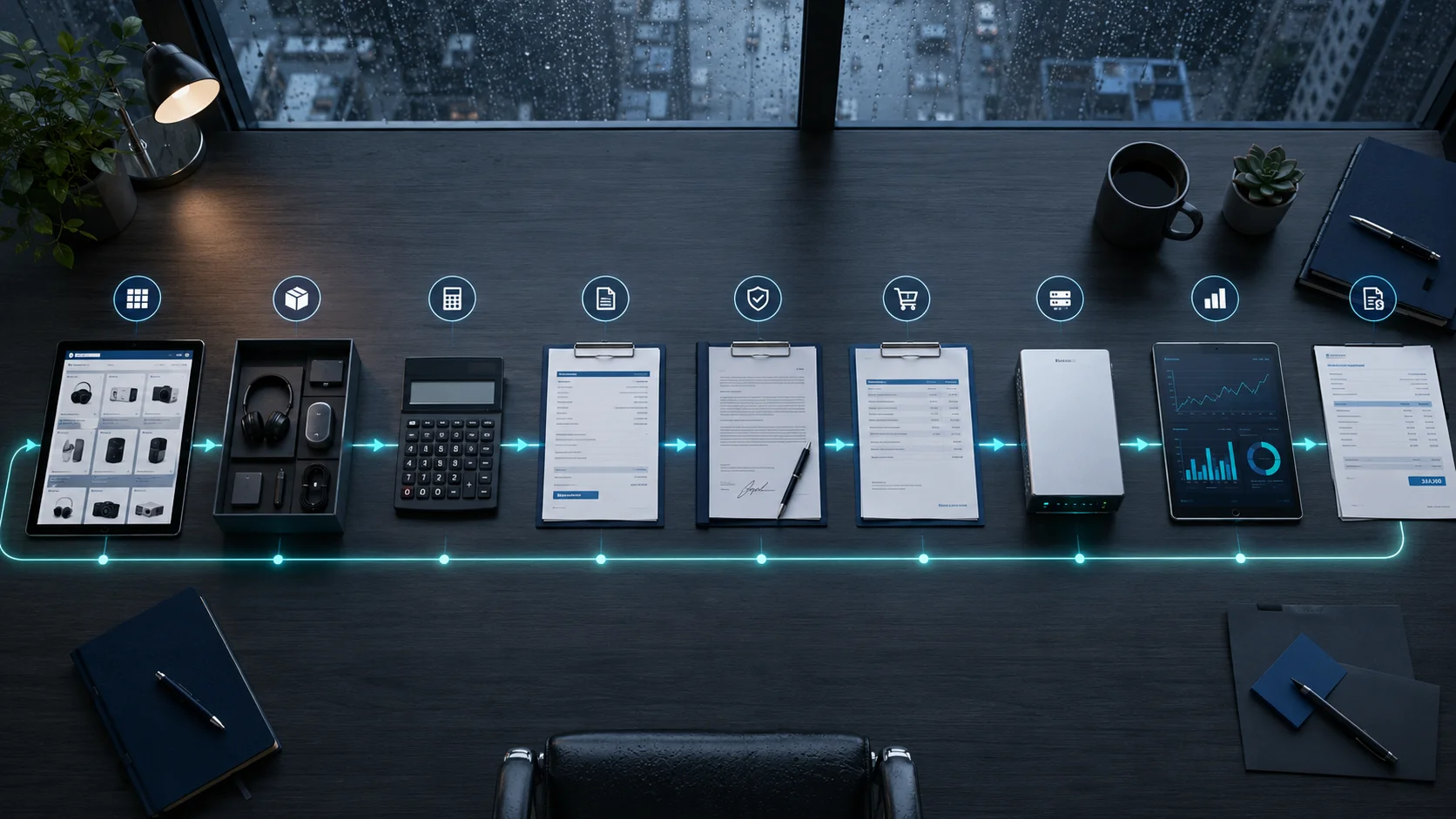
Product-to-Cash Lifecycle for the Revenue Management Consultant Exam
Learn the complete lifecycle instead of studying each object separately:
- Products and commercial terms are defined in the catalog.
- A seller selects and configures products.
- Pricing rules, discounts, and adjustments calculate the price.
- The seller creates and submits a quote.
- An accepted sale may produce contracts, orders, or both.
- Order fulfillment may create or update customer assets.
- Customers can amend, renew, upgrade, reduce, or cancel their products.
- Billing uses the relevant order, contract, asset, and usage information to calculate charges and create invoices.
For each stage, identify:
- The business requirement
- The record that begins the process
- The records that are created or updated
- The rules that run
- The next step in the lifecycle
This helps with scenario questions that ask what should happen first or which component should handle a requirement.
Platform Tools Tested in Revenue Management Consultant Scenarios
You should recognize the purpose of these platform components:
- Context Service provides contextual data used during configuration and pricing.
- Business Rules Engine evaluates decision tables, expressions, and business rules.
- OmniStudio supports guided user interactions and business processes.
- Dynamic Revenue Orchestrator coordinates order decomposition and fulfillment activities.
The exam may describe a requirement without naming the product component. You need to identify the tool that matches the requirement.
Hands-On Practice for the Salesforce Revenue Management Consultant Exam
Build one subscription offer containing:
- A recurring base product
- An optional add-on
- A volume discount
- A usage-based charge
- A 12-month term
Use that offer to complete this practice workflow:
- Add the products to a catalog.
- Configure the bundle relationships.
- Define pricing behavior.
- Create and calculate a quote.
- Apply an allowed discount.
- Submit the quote for approval.
- Follow the accepted quote into contracts and orders.
- Activate the order and review the resulting assets.
- Amend the subscription during its term.
- Check how the amendment affects future billing.
Use the official Revenue Management Consultant exam preparation trail for guided exercises.
Some Trailhead modules require their own special Developer Edition org. One training org may not work for every badge.
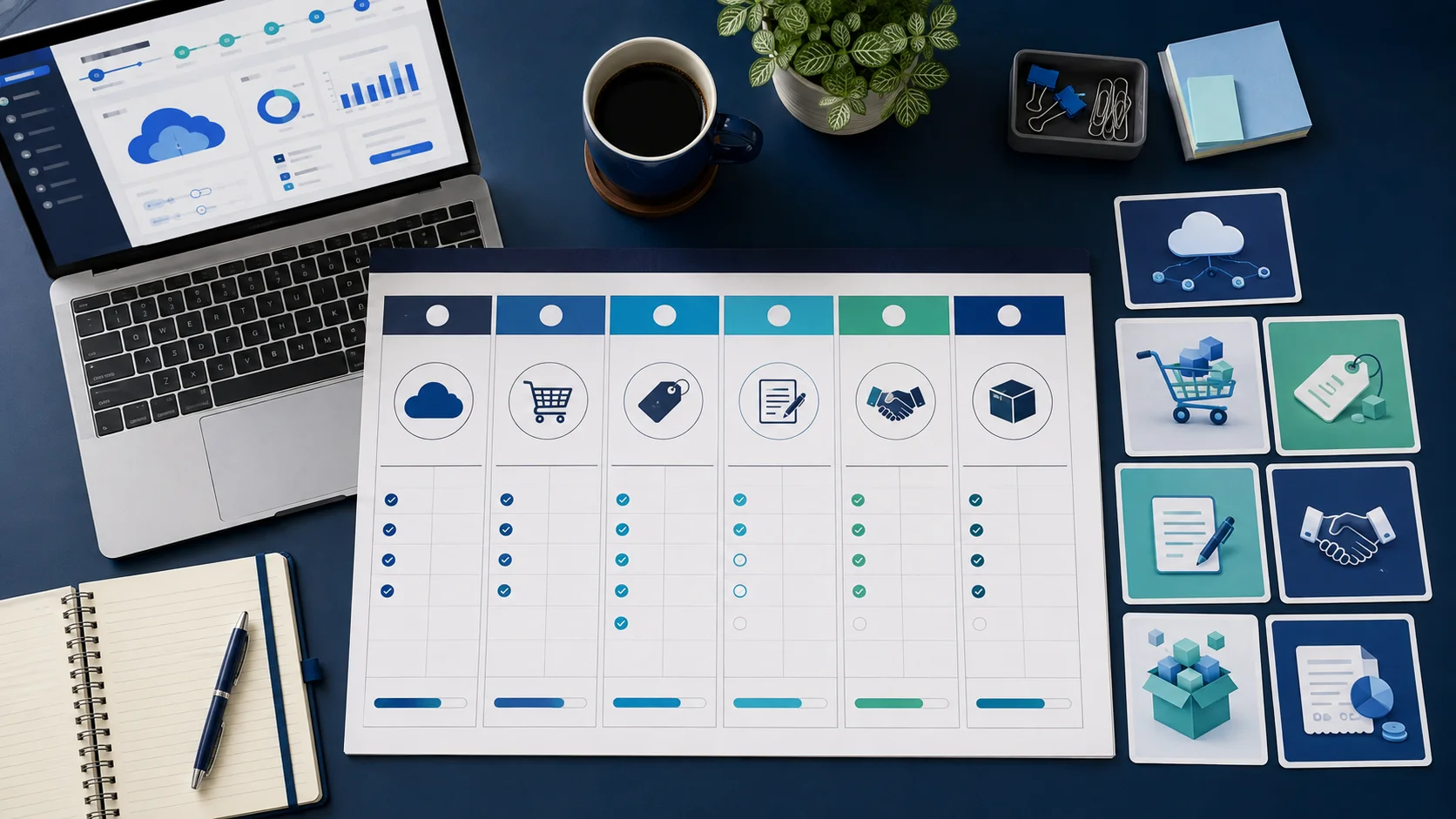
Six-Week Salesforce Revenue Management Consultant Exam Study Plan
This plan assumes that you understand basic Salesforce administration and have some Product-to-Cash knowledge. Allow more time if both Salesforce and revenue management are new to you.
| Week | Study area | Practical result |
| Week 1 | Exam blueprint and platform concepts | Explain the lifecycle and identify the main platform components |
| Week 2 | Product catalog and configuration | Build products, bundles, relationships, and configuration rules |
| Week 3 | Pricing and quoting | Compare pricing methods and complete a quote scenario |
| Week 4 | Contracts and orders | Explain quote acceptance, order creation, and fulfillment |
| Week 5 | Assets, usage, and invoicing | Complete an amendment and explain its billing effect |
| Week 6 | Mixed practice and review | Complete timed questions and correct weak areas |
Spend more time on topics you cannot configure or explain. Repeatedly reading the same material is less useful than completing a scenario and checking the resulting records.
How to Answer Rev-Con-201 Scenario Questions?
Use the following process:
- Identify the lifecycle stage.
- Find the main business requirement.
- Determine which record or process must change.
- Separate configuration-time behavior from transaction-time behavior.
- Eliminate options that belong to another lifecycle stage.
- Select the standard feature that meets the requirement without unnecessary customization.
Pay close attention to words such as first, best, most appropriate, and recommended. Multiple options may be technically possible, but the exam usually expects the answer that fits Salesforce’s intended design.
Common Mistakes When Preparing Without CPQ Experience
- Studying only the CPQ section
CPQ is important, but it is only one section of the exam blueprint. Catalog, platform, implementation, asset, order, contract, and billing knowledge also matter.
- Memorizing definitions without following the records
Learn what happens to the quote, contract, order, asset, and billing records after each business event.
- Using legacy Salesforce CPQ as an exact guide
Legacy Salesforce CPQ knowledge can help with bundles, pricing, and subscriptions, but the current Revenue Management architecture uses different components and processes.
- Depending on exam dumps
Question dumps may contain outdated or incorrect answers. They also do not teach the implementation judgment required for unfamiliar scenarios.

Salesforce Revenue Management Consultant Exam Readiness Checklist
You are approaching exam readiness when you can:
- Draw the Product-to-Cash lifecycle without notes
- Explain which platform component fits a stated requirement
- Compare common configuration and pricing methods
- Trace an accepted quote into downstream records
- Explain how amendments affect assets and billing
- Complete mixed practice questions within the exam time
- Explain why each incorrect answer is wrong
Do not rely on a practice score alone. You should be able to reason through scenarios you have not seen before.
Salesforce Revenue Management Consultant Exam FAQs
Can I take the Revenue Management Consultant exam without Salesforce CPQ experience?
Yes. Salesforce does not require previous CPQ experience or a CPQ certification. You still need practical knowledge of product configuration, pricing, quoting, contracts, orders, assets, and billing.
Is the Salesforce Revenue Management Consultant exam suitable for beginners?
It is not designed as an entry-level certification. There is no formal prerequisite, but the intended candidate profile assumes Product-to-Cash knowledge. Complete beginners will usually need additional preparation time.
How long should I study for the Revenue Management Consultant exam?
Six weeks may be enough if you understand Salesforce fundamentals and can study consistently. Consider eight to twelve weeks if product catalogs, subscription pricing, assets, and billing are new to you.