
Imagine kicking off a major Salesforce rollout, only to watch it derail because business goals, tech choices, and ROI tracking live in separate silos. We’ve all seen it happen. Teams build features nobody asked for. Budgets balloon without clear justification. Stakeholders lose confidence.
The platform strategy canvas solves this problem by putting everything that matters on a single page. It’s a visual planning tool that forces alignment between what your business needs, how technology delivers it, and how you’ll prove the value.
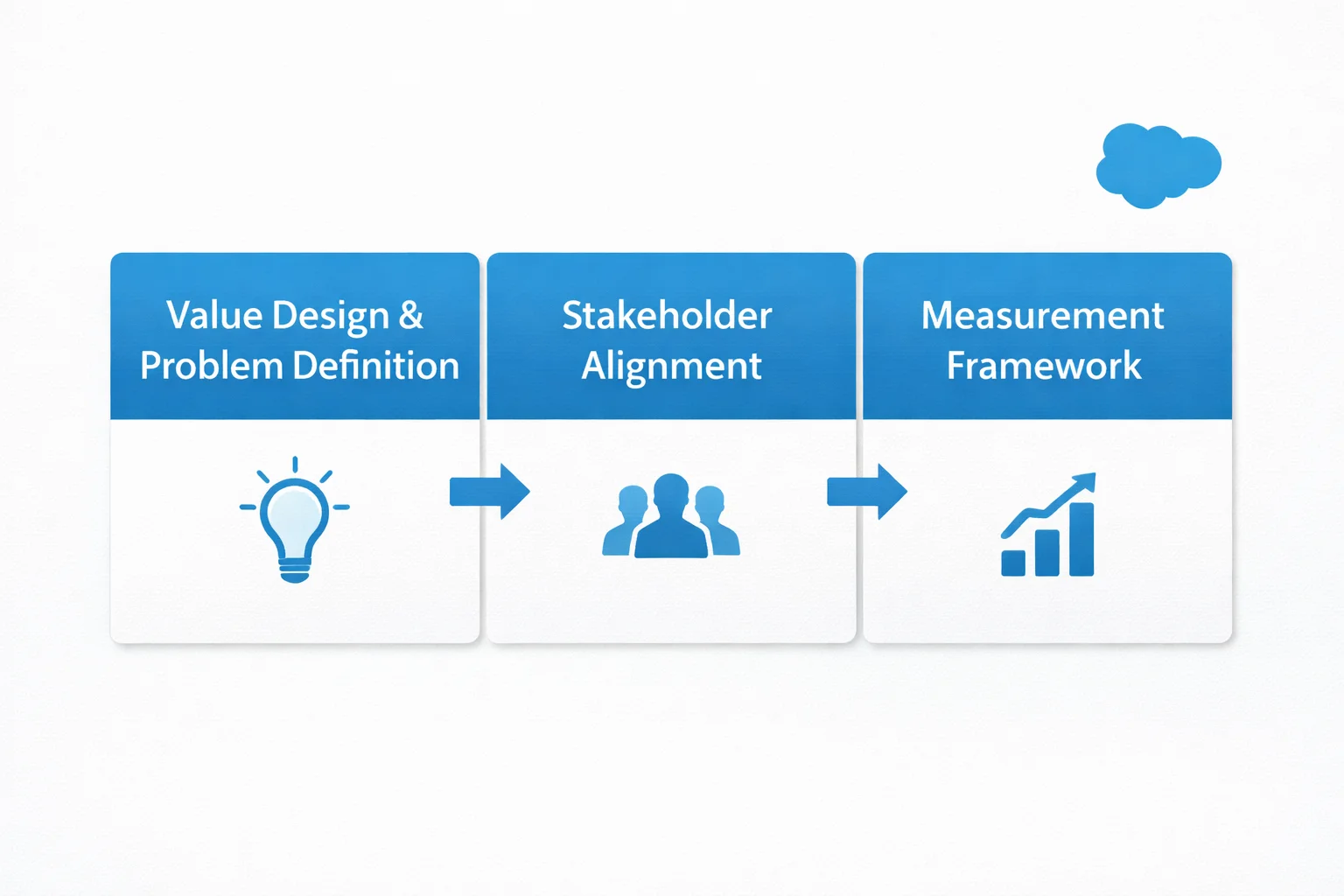
Why Platform Projects Fail Without Unified Strategy?
Complex Salesforce implementations collapse under their own weight when planning stays fragmented. Separate documents for business requirements, technical architecture, and financial projections create dangerous gaps. Teams interpret priorities differently. Decisions get made in isolation. The project drifts off course.
Research confirms that organizations using integrated planning frameworks achieve better outcomes. The canvas format makes relationships between business needs and technical solutions explicit, which dramatically reduces scope creep and misaligned priorities.
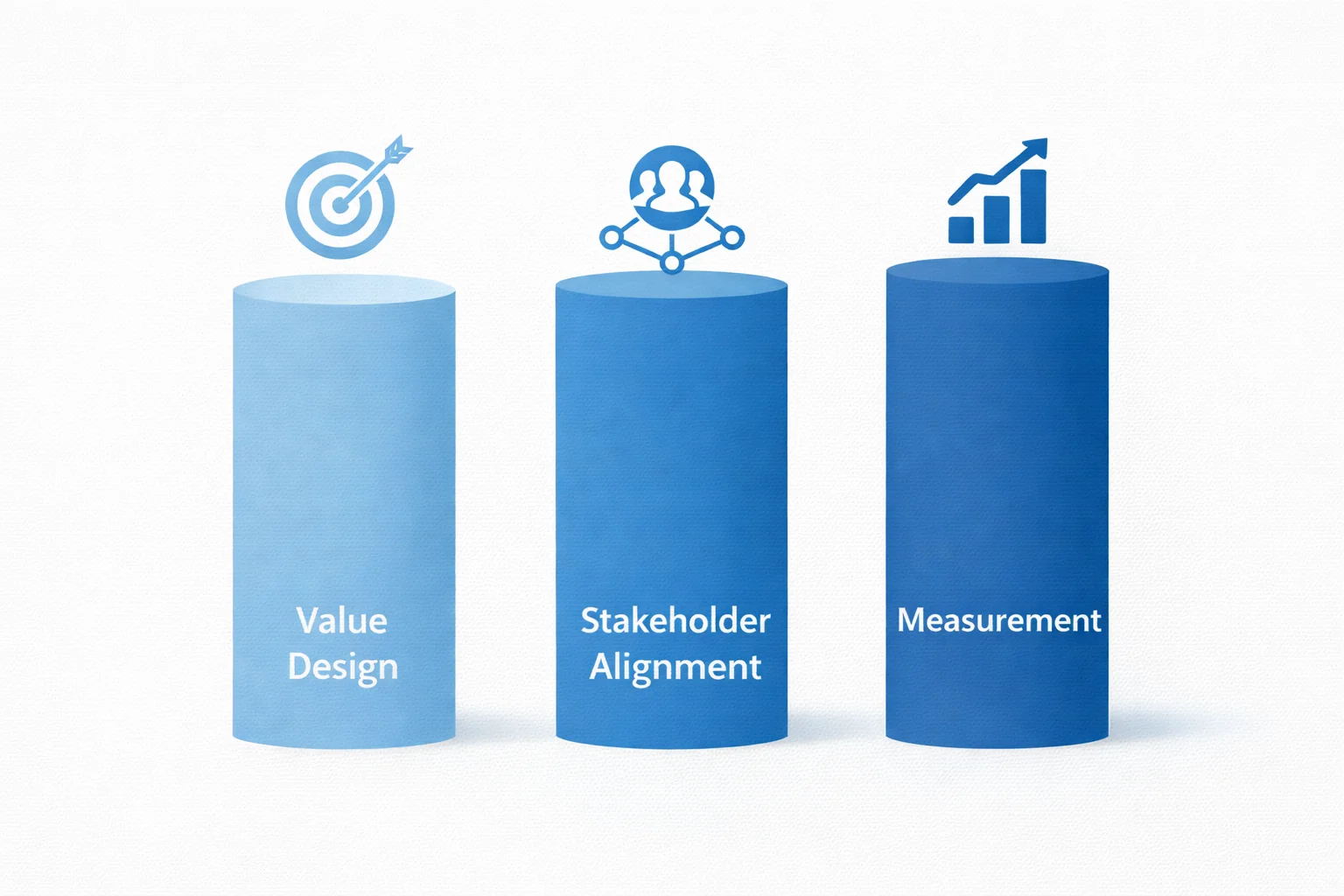
Three Core Components Every Canvas Needs
1. Value Design: Define the Problem Worth Solving
Start by articulating the specific business problem you’re addressing. Who experiences this pain? What does success look like for them? These questions establish your strategic direction and prevent “solution shopping” where teams pick technology before understanding the need.
2. Stakeholder Alignment: Map Who Matters and Why
Identify everyone who influences or is affected by your implementation:
- Executive sponsors who control budget and strategic direction
- End users who determine adoption success
- IT teams responsible for technical execution
- Compliance officers who establish guardrails
This is where Salesforce Certified Platform Strategy Designer skills become critical. The certification specifically covers stakeholder management techniques and governance frameworks that keep complex projects on track. Professionals with this credential know how to facilitate difficult conversations and translate executive vision into platform requirements.
3. Measurement Framework: Prove Your Value
Define key performance indicators upfront. Revenue impact? User adoption rates? Process efficiency gains? Your canvas should specify exactly which metrics matter and how you’ll track them. This transforms vague goals into quantifiable outcomes.
Real Results from Real Teams
At SalesforceKing, we’ve tracked teams using this approach. In one recent project, a healthcare client used the canvas to align five departments on a patient portal implementation. The result? They cut scope creep by 40%, accelerated stakeholder buy-in, and launched two weeks ahead of schedule. The canvas gave them a shared language for decision-making.
Another financial services client reported that onboarding new team members dropped from three days to three hours because the canvas provided immediate strategic context.
How to Build Your Canvas: A Step-by-Step Approach?
Gather your key stakeholders for a collaborative planning session. Use this sequence:
- Current state mapping – Document existing systems, processes, and pain points
- Target state definition – Outline your desired future with specific objectives
- Gap analysis – The space between current and target becomes your roadmap
- Iteration planning – Break the gap into manageable phases
This framework works for new implementations and optimization projects alike. If you’re preparing for the Salesforce Certified Platform Strategy Designer exam, mastering these strategic frameworks is essential. Check out our guide How to Create a 30-Day Study Plan for Your Salesforce Exam? to structure your learning around platform strategy concepts, governance models, and value design methodologies.
Key Takeaways for Platform Strategy Designer Exam Prep
The certification tests your ability to:
- Conduct stakeholder analysis and create engagement strategies
- Design governance frameworks that balance innovation and control
- Build business cases that connect platform capabilities to ROI
- Facilitate value design workshops that uncover real business needs
The platform strategy canvas directly addresses all four areas. Practice creating canvases for different scenarios to build pattern recognition.

From Strategy to Career: Leveraging Your Expertise
Once you’ve developed platform strategy expertise and earned your certification, communicate your value effectively to employers. Our guide From Certified to Hired: How to Leverage Your Salesforce Certification on Your Resume and LinkedIn shows you how to translate technical credentials into career opportunities that hiring managers actually understand.
Take Action: Build Your First Canvas Today
The platform strategy canvas provides strategic clarity that separates successful Salesforce projects from expensive technical experiments. It won’t eliminate every challenge, but it creates the alignment necessary for teams to navigate complexity together.
Ready to build your own canvas? Download our free platform strategy canvas template at Salesforce to get started. Or dive deeper with our Platform Strategy Designer practice exams that test these exact concepts in realistic scenarios.
In complex enterprise environments, this level of strategic alignment often determines whether your Salesforce initiative delivers transformational business value or becomes another cautionary tale about failed implementations.